Quick answer
At their core, holiday party ideas come down to 3 choices: which holiday, who is coming, and the hosting style that ties it together, all settled up front before any decor or menu. Sequence arrivals, the main food, the games, and the gift or photo moment across a 2-to-6-hour window scaled to the holiday and the headcount.
Boil a holiday gathering down to what matters and 3 choices remain, all made before the table goes down: the holiday on the calendar, the guest mix your home or venue can host, and the hosting style that ties the room together. Strong holiday party ideas stand on those 3.
Build in the wrong order, sourcing garlands, signage, and food trays before the holiday and format are locked, and the gathering splinters into 4 loosely joined themes instead of one cohesive arc from welcome through send-off.
Peel back the calendar and the same 3 choices sit under every date. A 14-guest Christmas dinner at home, a 30-guest Halloween cocktail with a costume cue, an 18-guest Easter brunch with an egg-hunt rotation, or a 10-guest Valentine's evening with a small-plates board all come back to them. The sections below build out from there: the holiday picker, the per-holiday hosting guides across Christmas, Halloween, Easter, Thanksgiving, Valentine's Day, and the rest of the year, then decorations, games, food, and the tools. The free Seasonal and Holiday Party Generator at the close fits a themed plan to the holiday and the guest mix; the Party Decoration Ideas hub covers more decorating ideas.
- 2 to 6Hour Party Window Scaled to the Holiday
- 8 to 40Guests Across Most Holiday Gatherings
- $150 to $1,500Typical Budget Band by Holiday and Format
🛒 As an Amazon Associate, we earn from qualifying purchases, at no extra cost to you.
Holiday Party Decorations Balloons
Check Price on AmazonHoliday Party Banner
Check Price on AmazonHoliday Party Tableware
Check Price on AmazonHoliday Party Centerpiece
Check Price on AmazonHoliday Party Lights
Check Price on AmazonParty Decoration Supplies
Check Price on AmazonWhere Should Holiday Party Planning Start?
The holiday on the calendar comes first, and every other decision follows that date. Settle the holiday and the date up front, then the guest mix, the venue, the food, the games, and the decor all fall into line. Six holiday groups cover most party hosting across the calendar year.
Winter holidays. Christmas, Hanukkah, New Year's Eve, and the wider December-to-January gathering window. Hosting styles run from family-traditional to office-cocktail to glam-and-gold. Headcounts swing from 8-guest intimate to 40-guest open-house. The Ideas for Christmas Games and Ideas for Christmas Decorations Across the Whole House guides cover Christmas; the Hanukkah Party Ideas hub walks the 8-night celebration on its own page.
Halloween. Late October hosting that splits cleanly between adult costume cocktail parties, family-friendly daytime gatherings, and kids trick-or-treat events. The Costume Ideas for Halloween guide carries the costume direction for adults, teens and families; the Ideas for Halloween Decorations guide covers the spook-to-glam decor range.
Spring holidays. Easter, Mother's Day, Father's Day, and the late-April-to-June daylight gathering window. Hosting tilts toward daytime brunches, garden gatherings, and family meals. The Easter Basket Ideas, From Treats to Keepsakes and Easter Game Ideas guides cover Easter across every age mix.
Thanksgiving. The November harvest meal anchored on the table, not the games or the bar. Hosting styles run from formal-plated to potluck-buffet to no-fuss family gathering. The Thanksgiving Game Ideas and Thanksgiving Decoration Ideas guides cover the games and the decor.
Valentine's and milestone romance. Mid-February hosting that splits between couples-only intimate dinners and Galentine's-format friend-group gatherings. The Valentine Party Ideas and Valentine's Day Ideas Beyond the Party guides cover the format pair.
Year-round holidays. Independence Day, Memorial Day, Labor Day, St. Patrick's Day, Mardi Gras, Cinco de Mayo, and the small holiday calendar that fills out the rest of the year. The 4th of July Decorations guide covers Independence Day; New Year's Eve belongs with the winter holidays, and the NYE Party Ideas guide handles it.
Four decisions come first. Pick one holiday, one hosting style (family, cocktail, dinner, brunch), one venue type, and one moment the night builds toward. Skipping this step means decor and food trays get sourced before the style is locked, and the gathering ends up a supply-store haul instead of one cohesive scene. The free Seasonal and Holiday Party Generator at the close takes the first and the third of those, alongside the age mix, the group size and the budget, and builds the theme and palette out from there.
How Do You Plan a Christmas Party Without the Overwhelm?
Christmas hosting carries the heaviest planning load on the calendar because the holiday combines a tablescape, a gift moment, a games block, and multi-vibe decor inside one evening. Lock the style first, then the rest falls into place. Eight steps close out the Christmas plan.
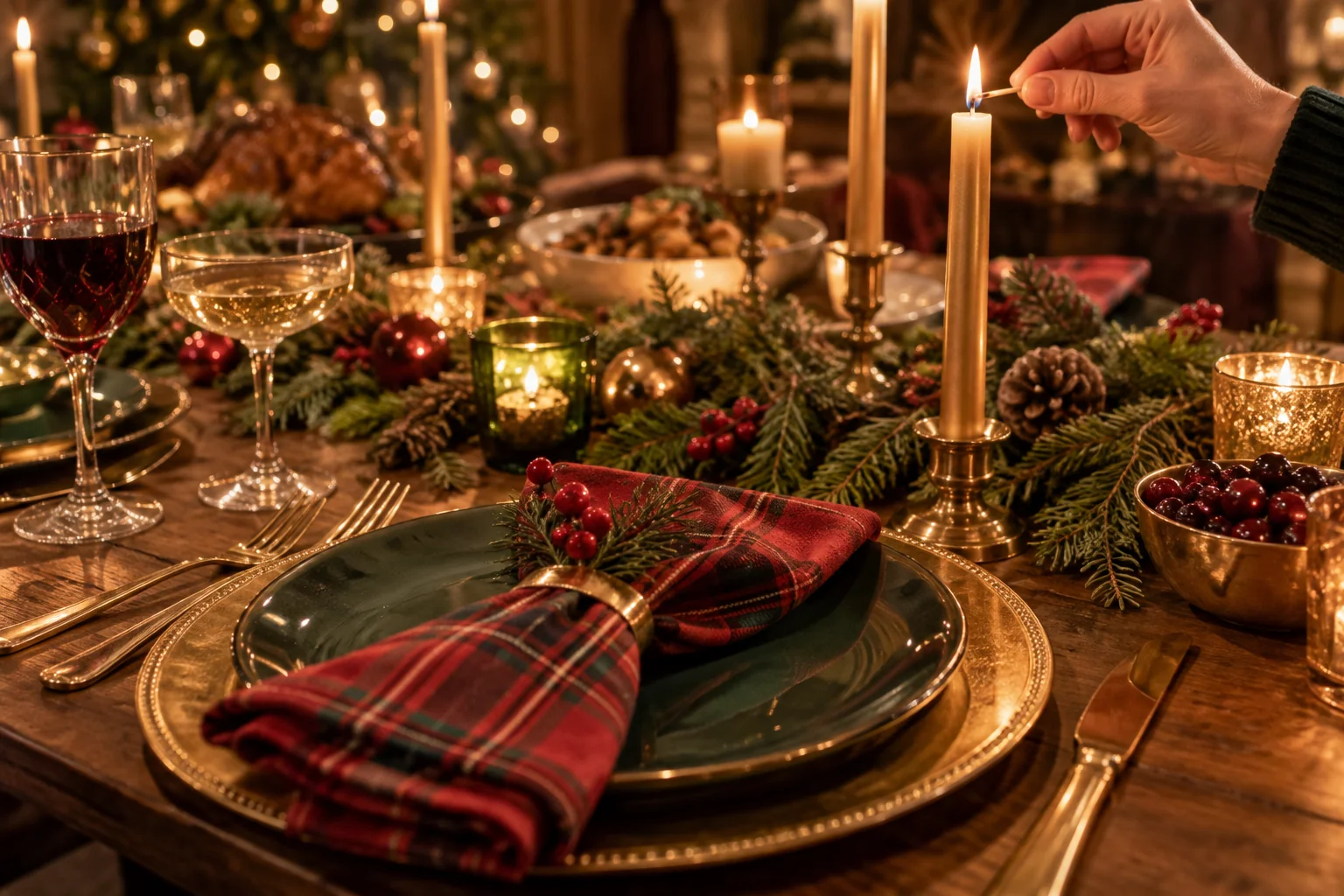
Pick a Christmas hosting style. Five styles cover most Christmas parties: the traditional family dinner, the office or work cocktail party, the friend-group white-elephant evening, the open-house drop-in afternoon, and the glam-and-gold dinner party. The Adult Christmas Party Ideas guide covers the adult-skew styles; the Office Christmas Party Ideas guide handles the workplace version and Work Christmas Party Outfit Ideas dresses it; the Company Christmas Party Ideas guide carries large-format corporate hosting.
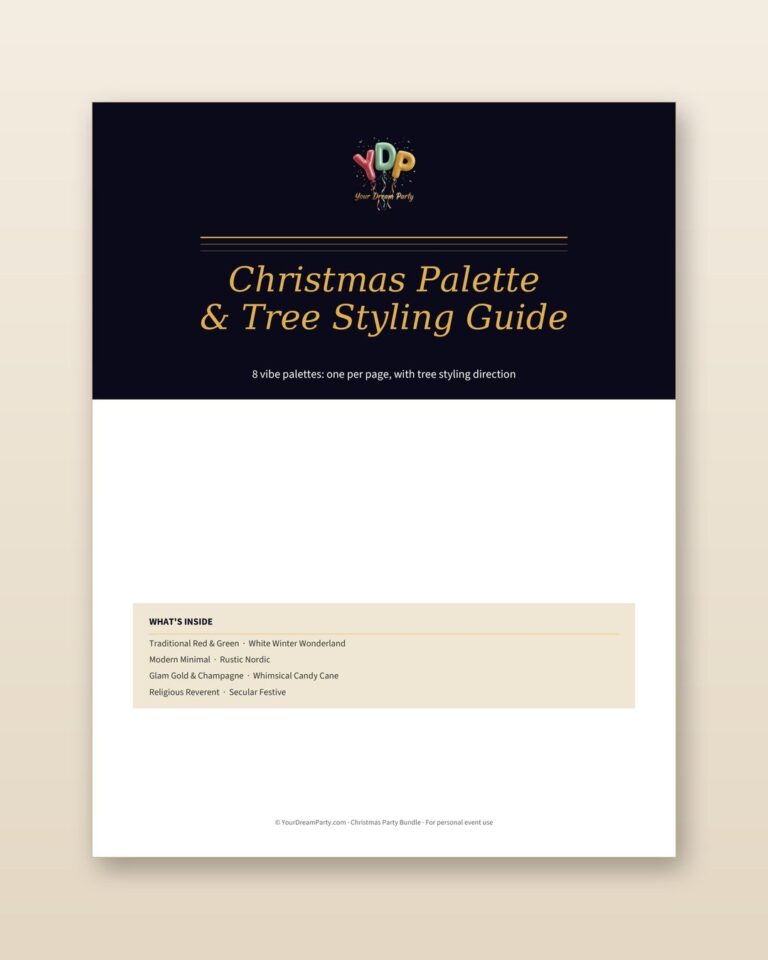
Lock the Christmas color story. One clean palette does more than a whole Christmas-store haul. Eight palettes carry most Christmas hosting: traditional red and green, white winter wonderland, tonal minimal, rustic Nordic, glam gold and champagne, whimsical candy-cane, religious reverent, and secular festive. The Christmas Theme Ideas guide walks the palette-to-decor decision tree.
Build the Christmas decor. Garland, tree, and tablescape are the 3 anchors. Polish on the mantel comes from cedar or magnolia, not a plastic store-bought garland. The Christmas Garland Ideas guide covers mantel and banister styling; the Christmas Tree Garland Ideas guide covers the garland on the tree; the Ideas for Christmas Decorations Across the Whole House and Christmas Decor Ideas guides carry the room-by-room decor ideas.
Sequence the Christmas dinner table. A formal Christmas dinner runs 4 to 6 courses across a 2-to-3-hour seated window. Plate from the kitchen for groups under 8; serve family-style for groups 8-to-14; run buffet-and-circulate for groups over 14. The Christmas Cracker Ideas guide covers the per-place-setting accent; the Christmas Ornament Ideas guide covers ornament styling and crafts for the tree.
Plan the gift-exchange or white-elephant moment. Lock the format upfront: white elephant (steal-and-swap), Yankee swap (numbered draws), Secret Santa (paired draws), or a children-and-adults split where kids open everything and adults swap. Set a budget on the invitation: $20 to $40 covers most groups; $40 to $80 covers an office or extended-family exchange. The Christmas Gift Giving Game Ideas guide walks the swap formats and the price caps.
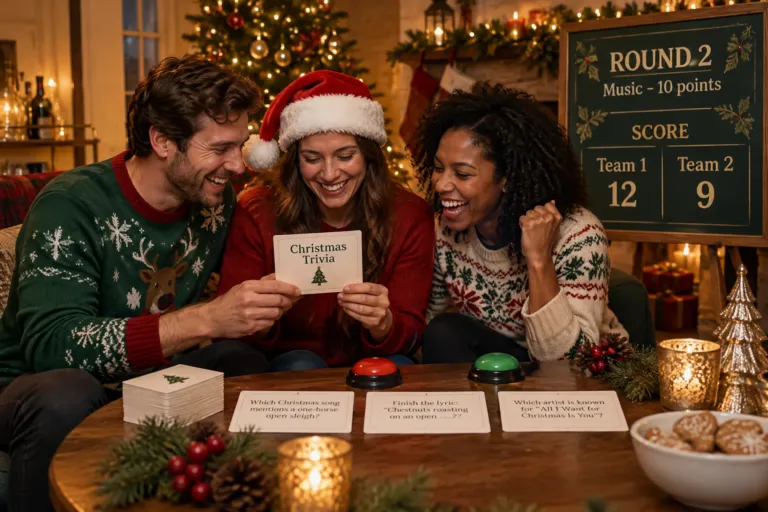
Pick the Christmas games block. A block of 2 to 3 games holds a 2-hour Christmas window without overprogramming. Pair one trivia or quiz round with one active or guess-the-thing format and one quiet round near the end. The Ideas for Christmas Games and Games About Christmas guides carry the full Christmas games lineup; the Christmas Bingo Ideas and Christmas Trivia Ideas guides walk the bingo and trivia formats; the Christmas Games for Adults guide covers the adult-only games shortlist.
Style the Christmas dress code. A dress-code cue on the invitation removes the awkward what-to-wear text the next day. Three options carry most invitations: festive cocktail, cozy casual, or ugly Christmas sweater. The Ideas for Christmas Outfits and Christmas Attire Ideas guides cover dress codes across gender and style; the Christmas Party Dress Ideas guide carries the dress shortlist, and What to Wear to a Christmas Party reads the formality from casual to semi-formal; the Ugly Christmas Ideas and Christmas Sweater Ideas guides cover the sweater-party version.
Send the Christmas invitations early. Send 4-to-6 weeks ahead for a December dinner; calendars fill out by mid-November. Send 2-to-3 weeks ahead for a casual drop-in or family gathering. The Ideas for Christmas Party Invitations guide walks the invitation wording and etiquette; the Christmas Party Ideas guide goes deeper on winter hosting.
Style Halloween Hosting From Spooky to Glamorous
Halloween hosting splits across 3 audiences: adult costume cocktail parties, family-friendly daytime gatherings with kids in costume, and kids-bracket trick-or-treat events. Pick the audience first, then the vibe within it, and the decor and games fall into place.
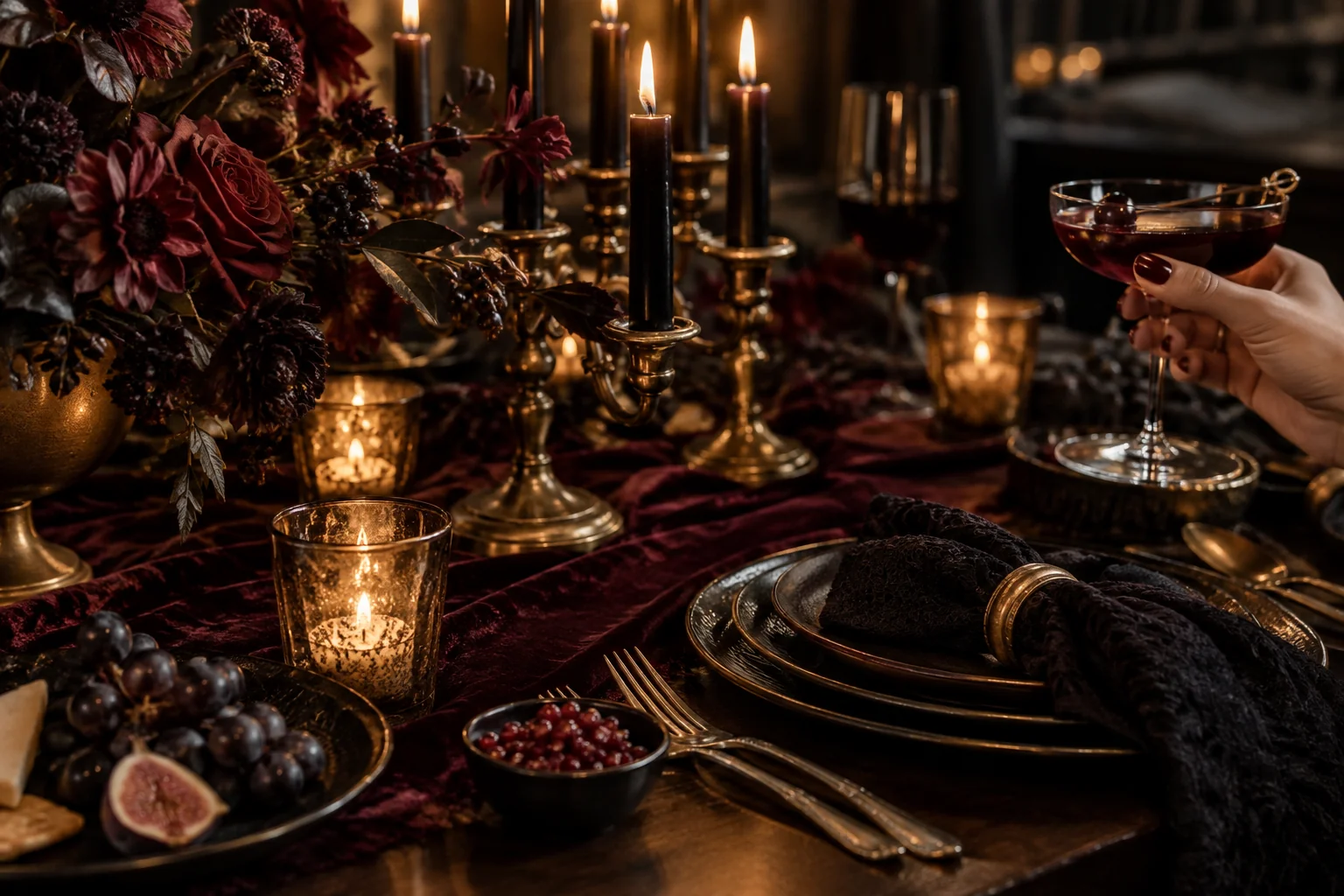
Pick the Halloween audience and vibe. For adults, 7 vibes cover most adult Halloween hosting: spooky-scary, witchy mystical, classic horror, gothic elegant, glamorous vamp, comedy camp, and cute cozy. For family-friendly hosting, 3 survive: cute-cozy, witchy mystical, and comedy camp. Glamorous vamp drops out alongside the scarier ones. The free Halloween Party Generator drafts a plan around the audience-and-vibe pair in under 3 minutes.
Halloween costumes. Costume cue belongs on the invitation. For adult parties, 3 formats carry most invitations: free-for-all, themed (era, color, classic monsters), or couples and group themes. The Costume Ideas for Halloween guide carries the costume shortlist and Where to Buy Halloween Costumes the places to find the pieces; the Adult Halloween Costumes for Women, Costume Ideas for Adults, and Costume Party Ideas guides cover adult-bracket costume direction; the Halloween Ideas for Men guide carries the men's-costume shortlist.
Group Halloween costume direction. At adult parties, group costumes photograph warmer than free-for-all costuming because they photograph as one cohesive group. Five group formats cover most adult groups: classic-monster ensembles, decade themes, single-color groups, character archetypes, and food-and-drink themes. The Group Halloween Costume Ideas and Family Halloween Costumes guides carry the group-format shortlist; the Halloween Birthday Ideas guide covers the kids-Halloween-birthday crossover.
Halloween decor. The palette runs orange-black-purple-blood-red on the spooky end, cream-and-gold on the cozy end, and emerald-velvet-gold on the glam-vamp end. Anchor with a backdrop wall, a candle-and-cobweb tablescape, and a photo corner. The Ideas for Halloween Decorations and Halloween Decor Ideas guides carry the full decoration lineup; the Scary Halloween Costumes and Atmosphere and Creepy Halloween Costumes guides cover the spook-end variants, Inflatable Halloween Costumes covers the comic blow-up suits, and the Halloween Party Ideas hub plans the whole night; the Halloween Door Decor guide covers entryway styling.
Halloween food. Style the food to the vibe, not the recipe. Spooky food labels (witch's brew, vampire bites, mummy wraps) carry more atmosphere than the food itself. The Halloween Party Food Ideas, Halloween Snack Ideas, and Ideas for Halloween Treats guides carry the snack-and-bar shortlist. Always check for food allergies before serving and label each dish with its ingredient list.
Halloween games and activities. A block of 2 to 3 games holds an adult Halloween cocktail window. For kids parties, sequence a costume parade, a candy-bag-stuffing station, and a guessing or matching game. The Halloween Games for Adults, Halloween Activity Ideas, and Halloween Trivia Ideas guides carry the games shortlist.
Plan the Easter Gathering From Brunch to Egg Hunt
Easter hosting splits between an adult-skew brunch or dinner and a family gathering with a kids-bracket egg hunt. Lock the format pair first, then the brunch and the activity settle into a clean 3-to-4-hour window.
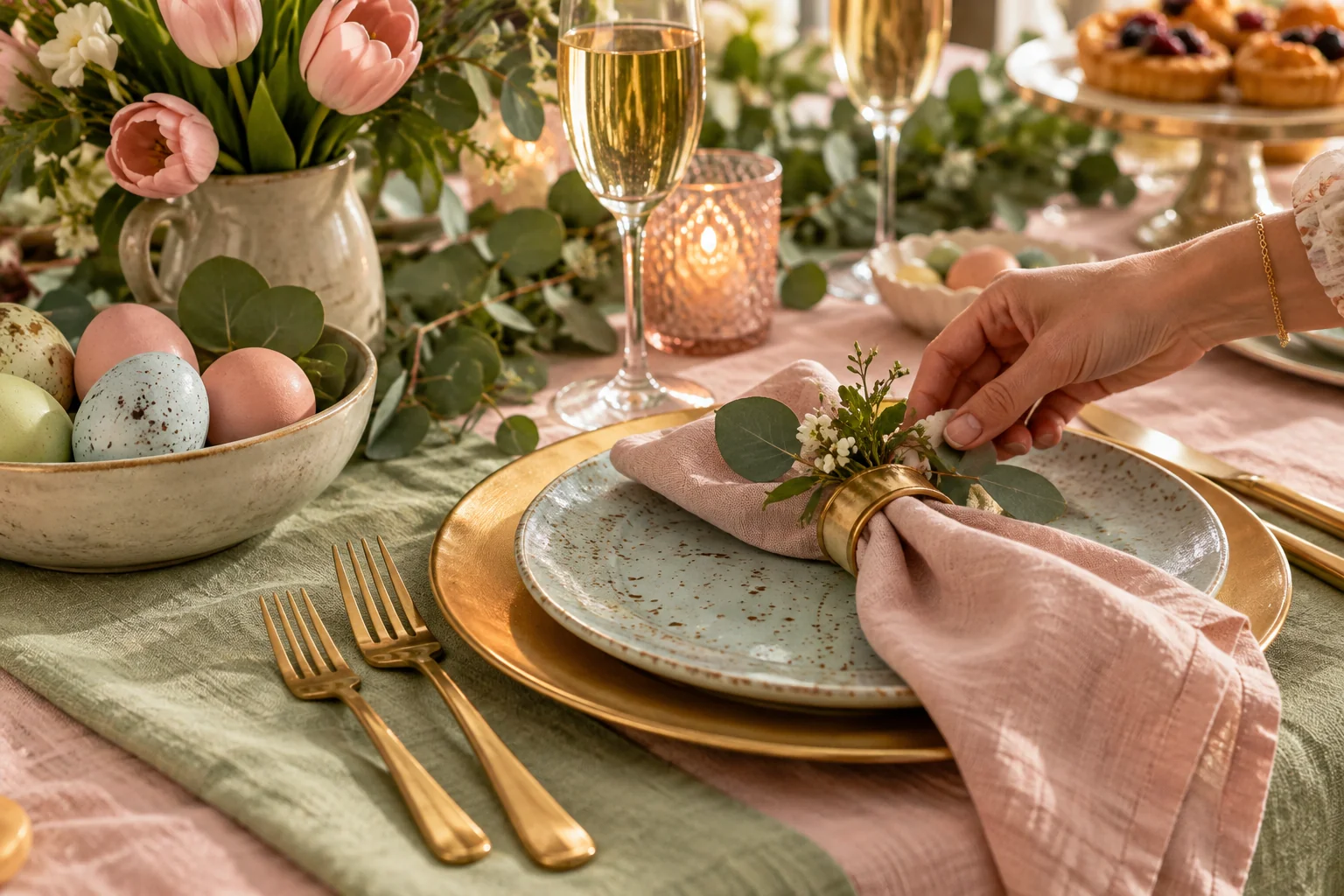
The Easter brunch. A 10-to-20-guest brunch runs across an 11am-to-2pm window with a sparkling-juice station, a small-plates buffet, and a closing dessert moment. Anchor with a pastel-and-eucalyptus tablescape and a fresh-tulip centerpiece. Broader styling sits in the Party Decoration Ideas hub; the Easter Decoration Ideas guide walks the Easter-specific decor.
The Easter baskets. Easter baskets serve as both decor and favor-handoff. Two formats carry most household brackets: a kids-bracket basket with a small plush, dyed eggs, and a chocolate moment, or an adult-bracket basket with a styled-foods curation and a small keepsake. The Easter Basket Ideas, From Treats to Keepsakes and Ideas for Easter Baskets, From Wicker to Crates guides cover baskets for each age group.
The Easter egg dyeing and craft block. A craft block before or after the meal carries the kids energy, and it turns into a family-photo moment on its own. Three formats carry most family Easter gatherings: dye-your-own eggs (with vegetable dye for under-3 guests), decorate-your-basket (with stickers and markers), or paint-a-wooden-egg (for ages 5 and up). The Easter Egg Ideas guide covers egg-decorating ideas.
The Easter egg hunt. Two formats carry most family-bracket egg hunts: the staggered-by-age hunt (toddler zone, school-age zone, tween zone) and the team-color hunt (2 teams compete to find color-coded eggs). Plan 8-to-12 eggs per child for the under-5 bracket and 12-to-20 per child for the school-age bracket. Pre-stuff with stickers, mini-toys, or wrapped candy; toddler-zone eggs take stickers or soft treats only, because mini-toys and hard candy are choking hazards for guests under 3. The Easter Game Ideas guide walks the hunt-and-games sequence.
The Easter food. Brunch templates run a hot anchor (quiche, egg bake, breakfast casserole), 2 cold sides (fruit platter, pastry board, charcuterie tray), one bread course (rolls, croissants, hot cross buns), and a sweet close (carrot cake, lemon tart, fruit pavlova). Always check for food allergies before serving and label each dish with its ingredient list. Use the free Charcuterie and Tablescape Designer for the styling.
Host Thanksgiving Without the Pre-Meal Panic
Thanksgiving hosting carries the seated-meal weight of the calendar and the most cooking-day pressure. Lock the format first, then the table, the games, and the kids-bracket activity all fall into place.
Pick a Thanksgiving style. Three styles cover most Thanksgiving hosting: the family-formal seated dinner, the friends-and-family buffet (Friendsgiving), and the no-fuss casual gathering with takeout supplements. The Thanksgiving Decoration Ideas and Thanksgiving Decor Ideas guides carry the decor; the Thanksgiving Dinner Ideas guide covers the meal-format shortlist.
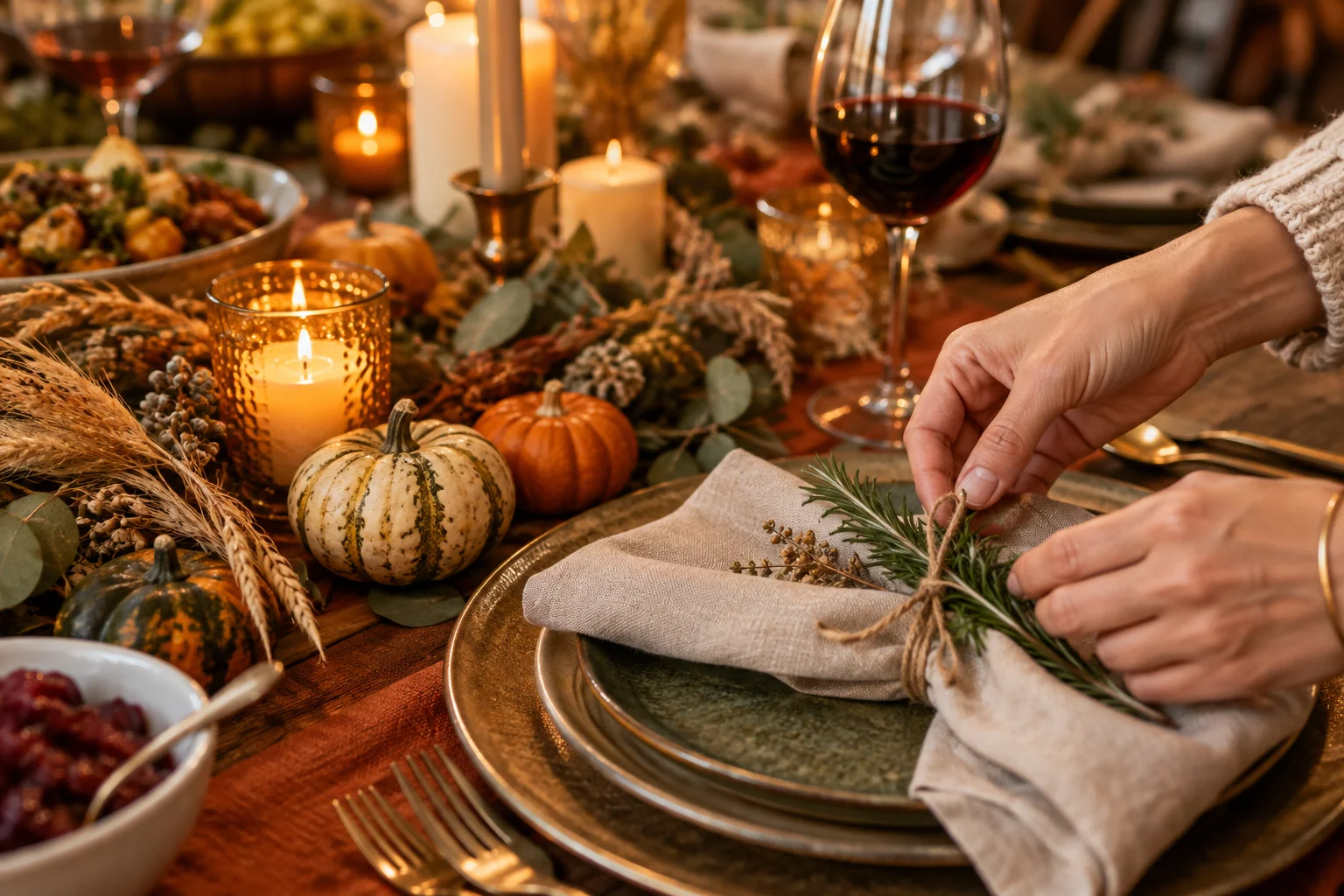
Style the Thanksgiving table. A clean fall palette runs burnt orange, sage green, brass, cream, and dark walnut. Anchor the centerline with dried wheat, gourds, and 3 candle clusters at staggered heights. Skip the supermarket cornucopia and skip the artificial fall leaves. Come February, the Valentine's Day Decorations guide sorts that holiday's decor by occasion.
Plan the Thanksgiving food sequence. A 4-to-6-hour Thanksgiving window splits across an arrival-and-snack hour, a main-meal seated block, a dessert-and-coffee moment, and a games or movie close. Stagger the cooking schedule across the morning so the bird hits the table as the snack hour ends. Always check for food allergies before serving, label each dish with its ingredient list, and verify with each guest before the table goes down.
Run the Thanksgiving games block. Run one quiet or trivia game during the snack hour, and save one active or guess-the-thing game for the post-dessert wind-down. The Thanksgiving Game Ideas and Festive Family Game Ideas guides walk the family-game shortlist, and Christmas Games to Play With Family carries it into December; the Party Games and Activities hub covers party games more broadly.
Plan the kids' activities. Kids at adult Thanksgiving gatherings need a structured set of activities or the energy spills into the seated meal. Pair a craft station (paper-turkey, leaf-painting, gratitude-card writing) with a kids-table coloring runner. The Party Scavenger Hunt guide covers the indoor-scavenger format; the Kids Party Ideas guide has the full kids-party playbook.
Style Valentine's Day for Couples and Friend Groups
Valentine's hosting splits between a couples-only intimate format and the friend-group Galentine's gathering. Both run a 2-to-3-hour evening window with a tablescape and a small-plates anchor.
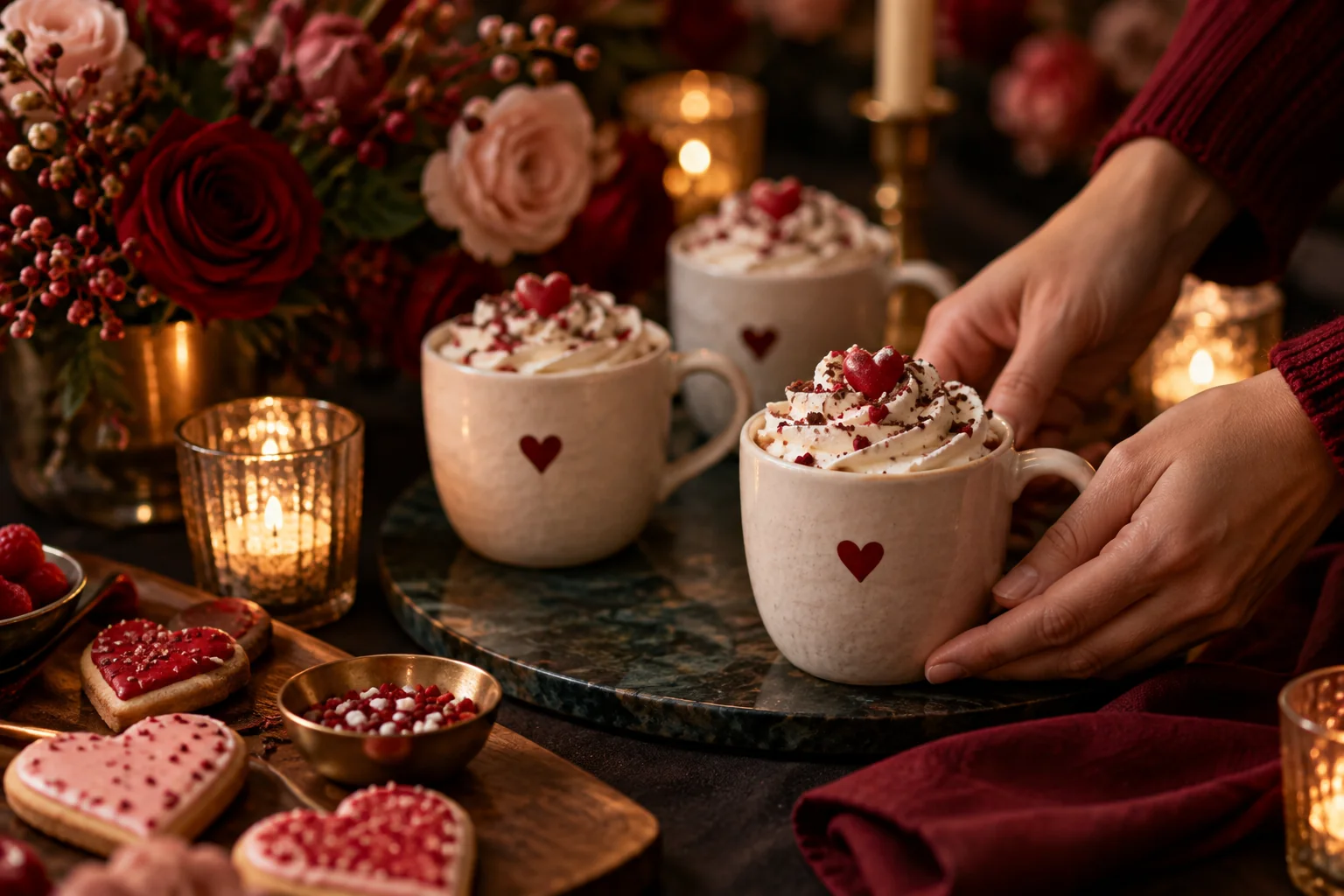
The couples-only intimate dinner. A 2-person Valentine's dinner runs a 3-course plated meal with candles, a small floral arrangement, and one steady music style (acoustic, jazz, instrumental). Skip the heart-shaped everything and lean into a refined palette of deep red, blush, and brass. The Valentine Party Ideas guide covers the couples format.
The Galentine's friend-group format. A 6-to-12-guest Galentine's runs an evening of small plates, signature cocktails for guests 21 and up, a styled tablescape, and one anchor activity (a craft, a card-writing block, a movie or playlist set). The Valentine's Day Ideas Beyond the Party guide covers the friend-group format.
Valentine's decor and color story. Three palettes carry most Valentine's hosting: deep red and blush with brass (refined romantic), pastel pink and white with rose gold (Galentine's cottage), or black and red with gold (edgy contemporary). Pick one palette and lock it across florals, candles, plates, and signage.
The Valentine's small plates. Style the table around a 4-to-6-board layout: a charcuterie board, a dessert board, a fruit board, and a shared-entree center plate. Use the free Charcuterie and Tablescape Designer for the board layout and color coordination. For broader styling, lean on the Party Decoration Ideas hub.
Gift-and-card moments. Lock the gift format on the invitation: white-elephant for Galentine's, no-gifts for couples-only, or a card-and-small-token format for friend groups. For an October gift moment, the Halloween Gift Ideas guide sorts gifts by who gives and who receives.
Year-Round Holidays That Carry a Party Crowd
The smaller holidays on the calendar carry a steady hosting traffic outside the big four (Christmas, Halloween, Easter, Thanksgiving). New Year's Eve, Independence Day, St. Patrick's Day, and Mardi Gras run the strongest hosting load across the rest of the year.
New Year's Eve hosting. A 10-to-30-guest NYE party runs across a 9pm-to-1am window with a champagne-toast anchor at midnight, a styled bar, and a single anchor game (countdown predictions, year-in-review trivia, photo booth with year-end props). The champagne and the bar are for guests 21 and up. The NYE Party Ideas guide carries the full format; the Cocktail Dresses for a Christmas Party guide covers what guests wear when the invitation says cocktail.
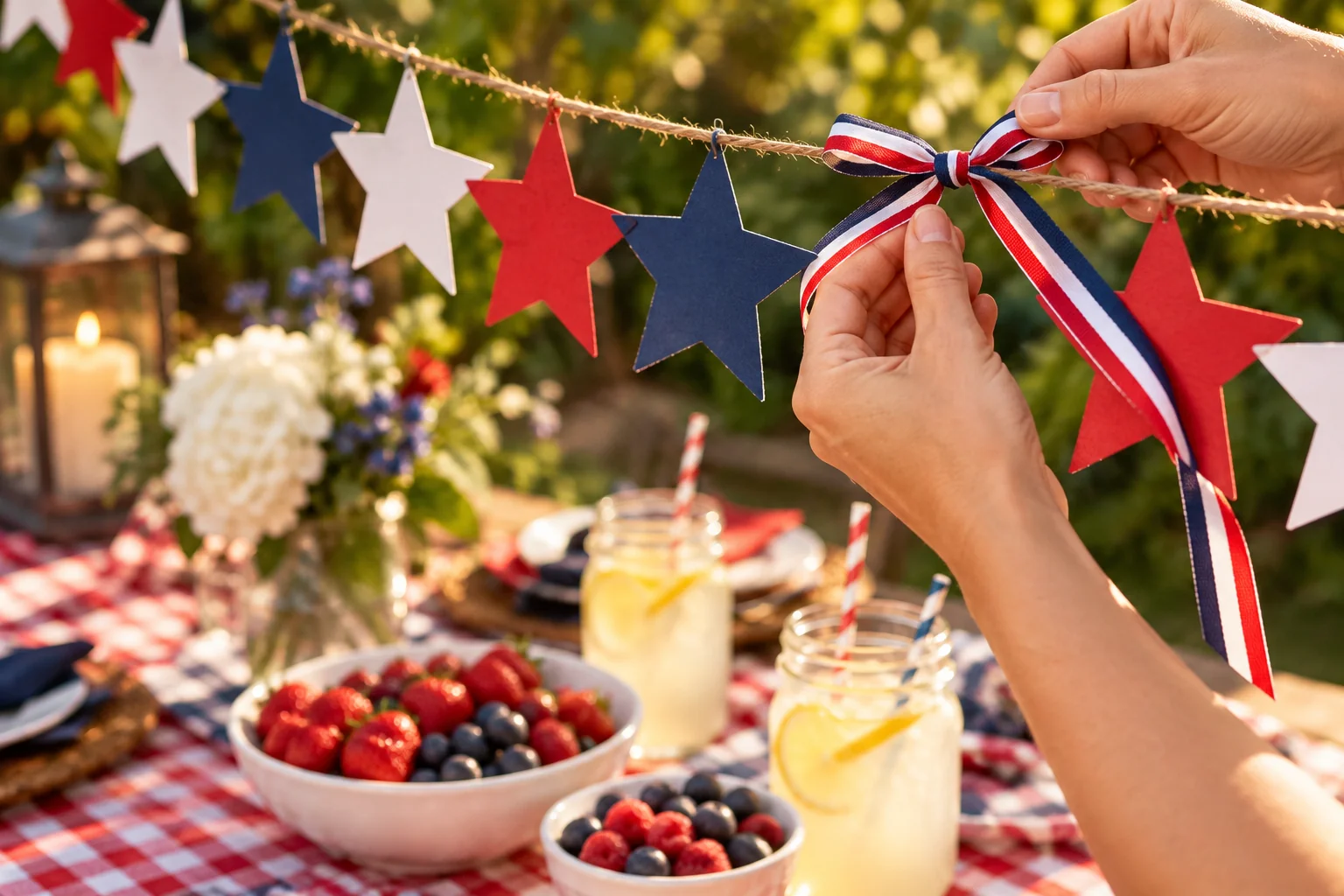
Independence Day backyard hosting. A 4th of July gathering runs daylight-to-dusk across a 4-to-6-hour window with a grilled-food anchor, a kids activity station, and a fireworks viewing close. Palette runs red, white, blue, and brushed brass for the styling. The 4th of July Decorations guide covers the decor; the Party Decoration Ideas hub has more to draw on.
St. Patrick's Day gathering. A St. Patrick's evening runs a 2-to-3-hour drop-in or seated format with an Irish-stew or shepherd's-pie food anchor, a green-and-gold palette, and one trivia or pub-quiz game. The St. Patrick's Day Party Ideas hub holds the full holiday guide on its own page; the Elegant Party Ideas guide covers the refined-hosting style that adapts to the green palette; the Appetizers for a Christmas Party guide, seasonal flavors aside, carries the make-ahead bite mix and the pieces-per-guest counts.
Mardi Gras and the parade-format holidays. Mardi Gras hosting carries a purple-green-gold palette, a beaded-favors handoff, and a king-cake dessert moment. Block one anchor activity (mask-decorating, jazz playlist, second-line parade for outdoor gatherings) and one signature drink. The Party Decoration Ideas guide adapts its palette-and-focal approach to holidays like this one; the Cinco de Mayo Party Ideas hub carries the papel-picado-and-taco-bar variant of the parade format.
Vintage-themed and cross-holiday gatherings. Some holidays double as theme parties (vintage-cocktail New Year's, decades party for Mardi Gras, garden party for Mother's Day). The Vintage Halloween Decor Ideas guide shows the overlay on Halloween, with 6 eras to pick from.
Smaller secular holidays. Mother's Day, Father's Day, and Memorial Day carry a brunch-or-barbecue format, a family-only feel, and a single anchor moment (card-and-gift handoff, group photo, signature dish). Plan a 2-to-3-hour window and one focal centerpiece.
How Do You Style the Holiday Decorations?
Holiday decoration is at its cleanest when it sits on 3 palette colors, one focal element per area, and one material running through the room. Mix 4 palettes across garland, table, bar, and entry and the effect is pure supply-store haul.
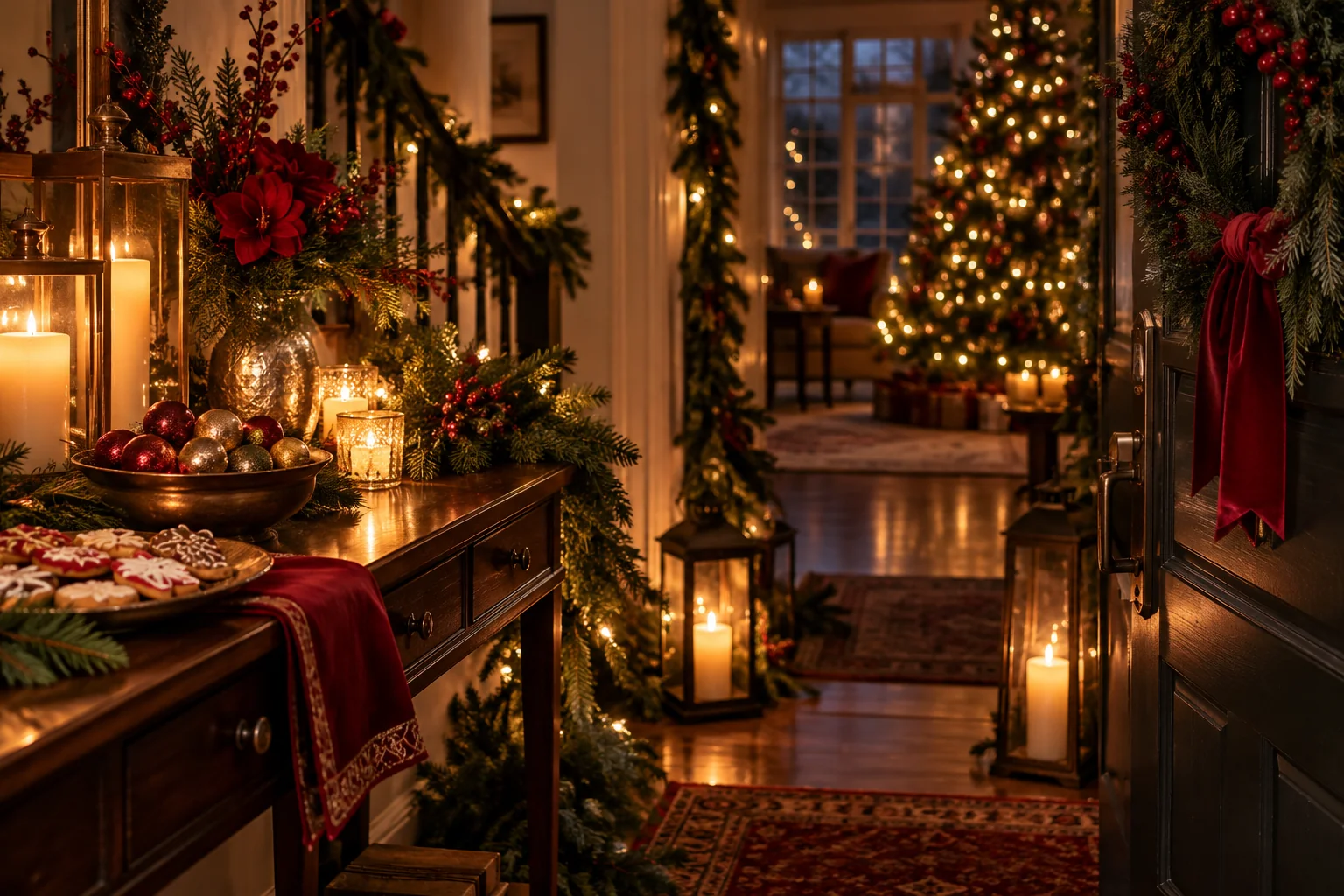
Style 3 areas. Focus on 3 areas: the entryway, the main gathering room, and the table. Give each one focal element (garland, tree or backdrop, centerpiece) plus 2 supporting touches (lighting, signage or accent). The Party Decoration Ideas hub maps out the wider decor.
The holiday color story. Each holiday carries a recognizable palette: Christmas runs traditional red-and-green or refined white-and-gold, Halloween runs orange-and-black or cream-and-gold, Easter runs pastel-pink-and-mint, Thanksgiving runs burnt-orange-and-brass, and Valentine's runs deep-red-and-blush. The free Party Color Palette Generator drafts a 5-color holiday palette in under 2 minutes.
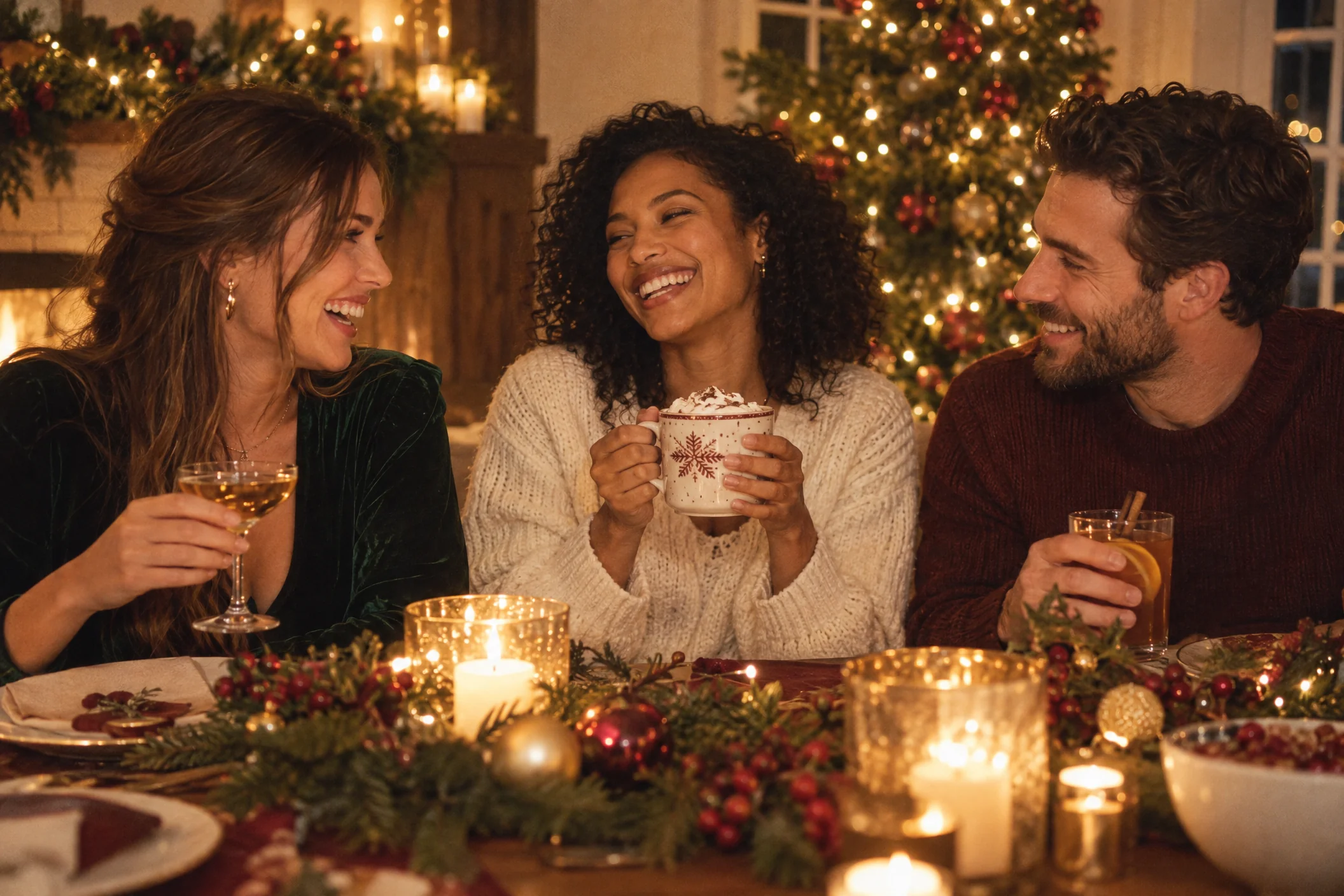
The lighting. Holiday lighting carries the strongest atmosphere weight. Three options work across most holidays: warm-white string lights overhead, candle clusters at staggered heights on the table and console, and a set of low lamps that replaces overhead lighting after dusk. Skip cool-white and skip multi-color blinking lights for adult hosting.
The natural-material anchor. Nothing plastic and store-bought can match the warmth of fresh greenery, dried botanicals, fresh florals, and natural wood, whatever the holiday. On the mantel, a cedar garland outclasses a plastic one every time. Dried wheat and gourds for Thanksgiving, fresh tulips for Easter, dark florals and trailing ivy for Halloween, and red roses or anemones for Valentine's.
The signage and place cards. A welcome sign at the entryway, food-table signage, and place cards on the table add the personal touch. The free Invitation and Sign Wording Generator drafts welcome-sign copy and invitation wording in under 2 minutes. The Christmas Tree Garland Ideas guide covers the garland styles for the tree.
Which Holiday Games Hold a Mixed-Age Group?
Holiday games sit at the heart of the gathering rhythm. When the games fit the audience mix, the holiday, and the energy moment, the room stays with you across the full window.
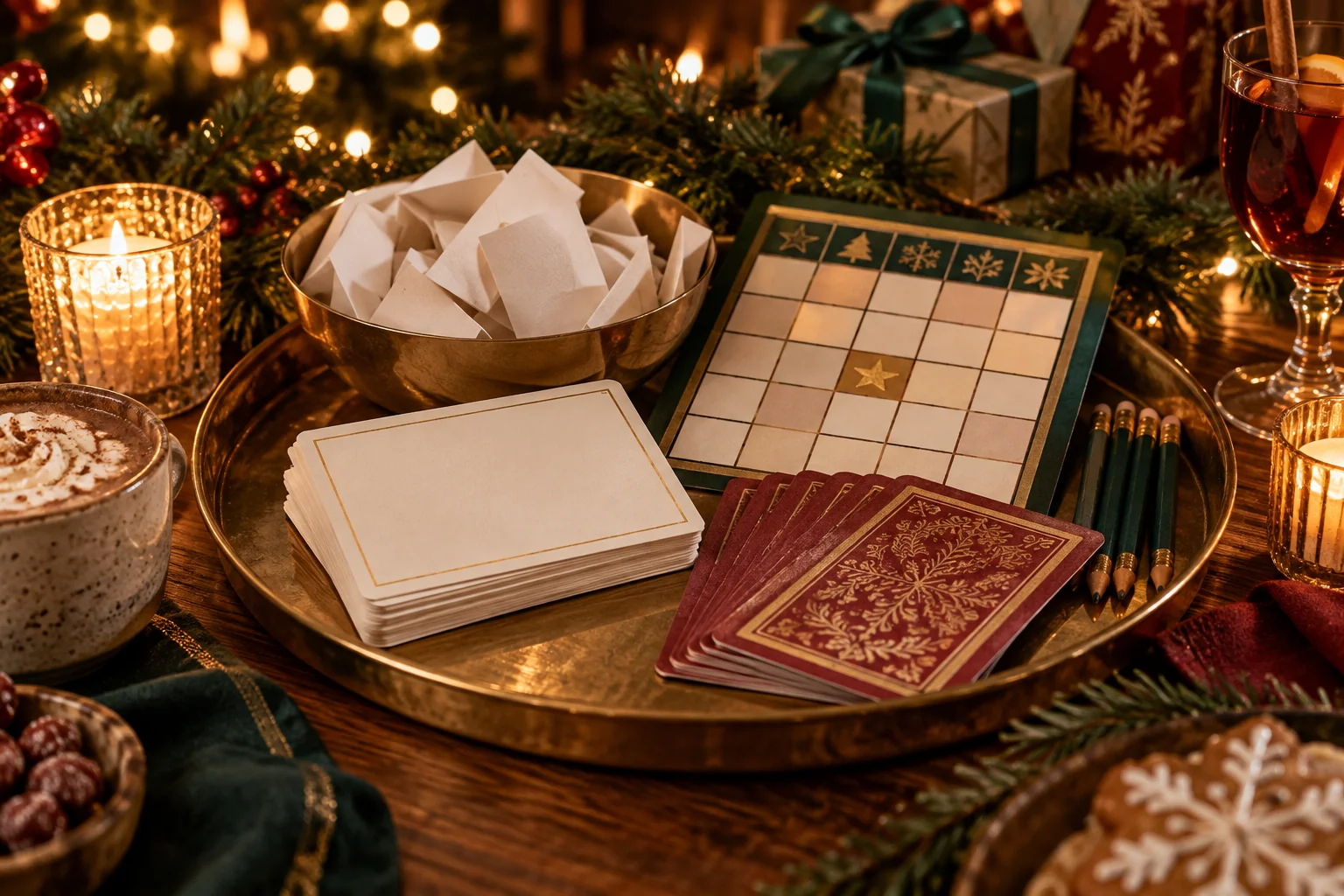
Games for a mixed-age room. Holiday gatherings often pull a wider age range than a birthday or shower: kids, teens, adults, and seniors at the same table. Three game formats hold every age: trivia or knowledge rounds (with kid-bracket and adult-bracket question pools), guess-the-thing or matching games (visual or audio prompts), and storytelling or memory-share rounds. For more games, see the Party Games and Activities hub; the Christmas Games for Adults guide carries adult-only formats for December.
Sequence the holiday games block. Open with a low-energy game during arrivals and snacks, run a mid-energy game after the food anchor, and close with a quiet round (storytelling, memory cards, photo slideshow) at the end. Three games hold a 3-hour holiday party rhythm without overprogramming.
Holiday trivia and quiz formats. Trivia works for every holiday because it adapts across age and topic. The Christmas Trivia Ideas and Halloween Trivia Ideas guides carry the holiday-trivia question pools; the Christmas Bingo Ideas guide covers the bingo-card variant.
Gift-exchange and white-elephant formats. Three formats carry most holiday gift-exchanges: white elephant (steal-and-swap with random draws), Yankee swap (numbered turns with a steal cap), and Secret Santa (paired draws sent in advance). Set a budget on the invitation: $20 to $40 for casual, $40 to $80 for office or extended-family.
Active and outdoor holiday games. Backyard or outdoor holiday gatherings carry active formats well. The Easter Game Ideas guide covers the egg hunt and the other Easter game families; the Party Scavenger Hunt guide carries the indoor and outdoor scavenger format.
Kids-only game block at adult parties. When adults run an adult-focused holiday gathering with kids in attendance, plan a kids-only game block in a separate zone, supervised by a designated parent or a sitter. Coloring runners, craft kits, a movie corner, or a scavenger-hunt clue trail keep the kids energy occupied without spilling into the seated meal.
Lay Out the Holiday Food From Snack Station to Plated Dinner
The holiday food works best in a fixed order: format first (seated, buffet, or grazing), then the menu follows. Five steps close out the food for every holiday.
Pick the holiday food format. Three formats carry most holiday hosting: the seated multi-course meal (Thanksgiving, Christmas dinner, Valentine's couples dinner), the buffet-and-circulate (Friendsgiving, open-house Christmas, Halloween cocktail party), and the grazing-and-snack (NYE, Galentine's, smaller daytime holiday gatherings). Let the headcount set the format: seated caps at 12 to 14, a buffet works up to 25, grazing covers up to 40. The Party Decoration Ideas hub carries the table styling for each format.
Style the holiday signature drink. A signature drink anchors the bar and removes the question of what to order. For Christmas, a spiced or mulled cider; for Halloween, a dark mocktail (purple, smoky) or a non-alcoholic punch; for Easter brunch, a sparkling-citrus punch or rose-petal-lemonade; for Valentine's, a glass of sparkling cider with a pomegranate float or a sparkling pink lemonade. Where guests 21 and up get a cocktail, pair it with a non-alcoholic option of the same quality. Always check for food allergies before serving and label each drink with its ingredient list.
The holiday charcuterie and grazing table. Grazing tables carry the cocktail or open-house format strongest. Build a charcuterie around 3 meats, 3 cheeses, 2 cracker or bread options, 2 fruits, 2 pickled or briny items, and one nut-and-dried-fruit row. The free Charcuterie and Tablescape Designer drafts the board layout and the styling that goes with it.
The holiday dessert moment. Anchor the dessert table on one centerpiece treat (a Yule log for Christmas, a pumpkin pie for Thanksgiving, a carrot cake or pavlova for Easter, a heart-shaped cake or fondant board for Valentine's, a king cake for Mardi Gras) plus 2 to 3 supporting smaller plates (cookies, fudge, fruit). The Party Decoration Ideas hub covers dessert display.
Holiday food safety and allergy notes. Always check for food allergies before serving, label each dish with its ingredient list at the table, and pair every alcoholic drink with a non-alcoholic option of similar quality. Always verify with your suppliers before purchasing. The Party Games and Activities hub covers the games that fill the hours around the food.
How the Seasonal and Holiday Party Generator and Companion Tools Carry the Plan
The Seasonal and Holiday Party Generator is a free tool that fits a themed plan to the holiday, the indoor or outdoor setting, the age mix, the group size, and the budget in under 2 minutes. The per-holiday details are the easiest place to stall, because the calendar carries 8 to 12 distinct hosting formats across the year. The generator outputs a theme name with a holiday-aware palette, a decoration checklist, an activity shortlist matched to the age mix, menu styling cues, and an atmosphere to aim for. Dedicated tools cover the 2 heaviest holidays: the free Halloween Party Generator walks you from audience to vibe to decor, and the free Christmas Party Generator handles the 8-vibe Christmas lineup with tree styling built in.
The Party Budget Calculator sizes the holiday budget across the standard categories (food, drinks, decor, favors, entertainment, photography, cake, venue) from the guest count and the tier you pick. Holiday gatherings carry a higher decor share than birthday or shower hosting, and marking decor as a priority is what lifts that category in the calculator's split. The Party Planning hub covers the wider budget-and-timeline planning that wraps the holiday-specific tools.
The Party Planning Timeline drafts a dated milestone countdown for the holiday gathering, from the 8-week opener through the day-of checklist. The runway is set by the complexity you pick: the simple setting trims the ladder to the last 4 weeks and the standard and elaborate settings run the full 8. Plug the holiday date in and the tool returns a milestone schedule that absorbs the cooking, decor, and shopping load across the prep window.
The Charcuterie and Tablescape Designer drafts the per-board layout and the table styling for grazing-format holiday parties. Drop the occasion, the surface size, an aesthetic and one of its palette presets, and the tool returns a zone layout you can download as a PNG, a palette swatch set, and prop and serving-ware suggestions matched to it. It says plainly that it covers visual styling only, and hands food quantities to the servings estimator.
Run the 4 tools in sequence: the seasonal generator settles the holiday plan, the budget calculator sizes the spend, the timeline lays the countdown, and the tablescape designer closes out the styling. Done in one evening, the whole sequence delivers a full holiday party plan in under 60 minutes of focused work. For the decor, see the Party Decoration Ideas hub; the Party Games and Activities hub covers games and activities; the Party Planning hub rounds out the hosting.
Frequently Asked Questions
How far in advance should I send holiday party invitations?
Send Christmas invitations 4 to 6 weeks ahead; December calendars fill out by mid-November. Send Thanksgiving invitations 3 to 4 weeks ahead. Send Halloween, Easter, and Valentine's invitations 2 to 3 weeks ahead. Send smaller holidays (St. Patrick's, NYE, July 4) 2 weeks ahead. Set an RSVP deadline 7 to 10 days before the gathering and send a 24-hour reminder to confirmed guests with venue address, dress-code cue, and parking notes.
What is the best palette for a Christmas party that does not feel cluttered?
Pick one of 8 Christmas palettes and lock it across decor, table, and signage. Traditional red and green is the classic, warm choice. White winter wonderland gives you clean and serene. Tonal minimal runs cream and brass with a single accent color. Rustic Nordic carries cedar greens, cream wool, and warm wood. Glam gold and champagne carries a refined feel for adult cocktail parties. Whimsical candy cane works for family hosting with kids. Religious reverent runs muted jewel tones. Secular festive runs bright primaries.
How many guests can I host for Thanksgiving dinner at home?
Seated Thanksgiving dinner caps at 12 to 14 guests at a standard dining table with 2 extension leaves. Buffet-format Friendsgiving can take up to 25 guests at home with rented tables. Larger gatherings need a venue swap (community hall, rented event space) or a split-format 2-room setup with seated adults in one room and buffet kids in another. Plan a 4-to-6-hour total window with a snack hour before the seated meal.
Are franchise costumes a problem at adult Halloween parties?
Branded-character costumes are common at private gatherings, but generic-category costumes (classic monsters, era themes, single-color groups, archetype groups) suit the editorial-style adult Halloween look better. Photo sets favor group themes that sit on a generic category over mixed franchise-character groups. The Halloween Party Generator pulls from generic-category options to keep the costume direction inclusive and photo-ready.
What is a strong Easter brunch food spread for 16 guests?
Plan one hot anchor (a quiche, an egg bake, or a breakfast casserole), 2 cold side boards (a charcuterie tray and a fruit-and-pastry platter), one bread layer (rolls or croissants with butter and jam), and one sweet close (a carrot cake or a lemon tart). Pair with a sparkling-juice bar and a coffee setup. Always check for food allergies before serving and label each dish with its ingredient list.
How do I run a gift exchange that does not stall the room?
Pick one format and set a budget on the invitation. White elephant runs 30 to 45 minutes for 10 guests with a 3-steal cap. Yankee swap runs 25 to 35 minutes with numbered turns and a 2-steal cap. Secret Santa runs the fastest because pairs are drawn in advance and each guest opens one gift in turn. Set a $20-to-$40 budget for casual gatherings and $40-to-$80 for office or extended-family groups.
What kids activities work at adult-focused holiday gatherings?
Plan a separate kids zone with one anchor activity (a craft station, a movie corner, a scavenger hunt with clue cards), supervised by a designated parent or a sitter. Coloring runners on the kids table double as decor and activity. Stagger the kids meal 30 minutes before the adults' seated meal so the kids zone is occupied while adults settle into the table.
How do I plan a holiday party on a tight budget?
Lock the format first; grazing and snack hosting costs far less than a seated multi-course meal. Source the decor in 2 layers: fresh greenery and dried botanicals (low cost, high impact) plus warm-white string lights. Skip the imported decor and skip the printed paper banners. Swap the catered drinks for a single signature drink, such as a spiced cider or a sparkling-citrus punch. The Party Budget Calculator drafts the spend by category in under 2 minutes.
Are decorative candles safe at a holiday party with kids and pets?
Use battery-operated candles in zones reachable by kids and by any pet that climbs onto tables or shelves. Use real-flame candles only in zones above kid reach (mantel shelf, high console), well clear of anything that can burn. Always extinguish all candles before guests leave. Always verify candle placement with your venue before the gathering.
How do I capture a holiday party without disrupting the room?
Run 2 photo surfaces: a designated photo corner with a styled backdrop and a tripod-mounted phone (guest-driven), plus a host-driven candid stream across the full window. Aim for 60 to 100 candid photos covering arrival, food and drinks, games or activities, and goodbyes. Get one group photo at the cake or signature-dish moment when guests are already gathered. Share the camera roll privately with confirmed-OK guests at the one-week mark.
Ready to Plan Your Holiday Party?
The fastest path from a blank calendar to a confident holiday hosting plan is to settle the holiday, the format, the headcount, and the anchor moment up front, then sequence the decor, food, games, and invitations against that core. The free Seasonal and Holiday Party Generator handles the holiday and the theme in under 2 minutes, and the Seasonal Decorations Checklist below carries the decor from palette to storage.
This page contains affiliate links to Amazon and other retailers. As an Amazon Associate, we earn from qualifying purchases at no extra cost to you. This helps us keep all our tools free.
Results generated by this tool are for planning and inspiration purposes only. Estimates are based on general guidelines and may vary depending on your specific circumstances. Always check for food allergies before serving. Always verify with your suppliers before making purchasing decisions.