Quick answer
The strongest kids party ideas begin with 3 locked choices: the age bracket, the headcount, and a single theme, settled before any decor or favor goes in the cart. Sequence arrival, activity, food, cake, and gift moments across a window scaled to the birthday child's age, from about an hour for toddlers to 3 hours or more for tweens.
Lock 3 choices before the cake order goes in. Pick the age bracket of the birthday child first. Set the headcount your home or venue can handle. Then name the theme that ties the room together. Strong kids party ideas rest on those 3, decided in that order.
Skip that order, source balloons, favors, and signage before the age and theme are settled, and the party fractures into 4 loosely joined pieces instead of one cohesive arc from arrival through pickup.
Hold those 3 steady and the format barely matters. A 12-guest third birthday at home with a craft station, a 20-guest seventh birthday at a community hall with an active-games block, a 15-guest tenth birthday at a trampoline park, or an 8-guest twelfth-birthday sleepover with a movie-night setup all run on the same base. Work down the list from there: the format, theme pick, venue match, timeline by age, decorations, food, games sequence, invitation run, favor bag, and photo plan. The free Kids Party Theme Generator at the close pairs a theme to the birthday child's age and interests; the Kids Party Themes guide carries the theme shortlist.
- 90 to 150Minutes for Ages 4 to 9
- 8 to 20Guests for Most Kids Parties
- $200 to $700Typical Budget Band
🛒 As an Amazon Associate, we earn from qualifying purchases, at no extra cost to you.
Kids Party Decorations
Check Price on AmazonKids Party Activity
Check Price on AmazonKids Party Favors
Check Price on AmazonKids Party Themed Plates
Check Price on AmazonKids Party Balloons
Check Price on AmazonKids Party Supplies
Check Price on AmazonWhere Should Kids Party Planning Start?
Start with the age bracket, since it shapes every decision that follows. Fix the age first and the headcount, the venue, the activity block, the food, and the time window all slot in behind it. Four age brackets carry most kids parties.
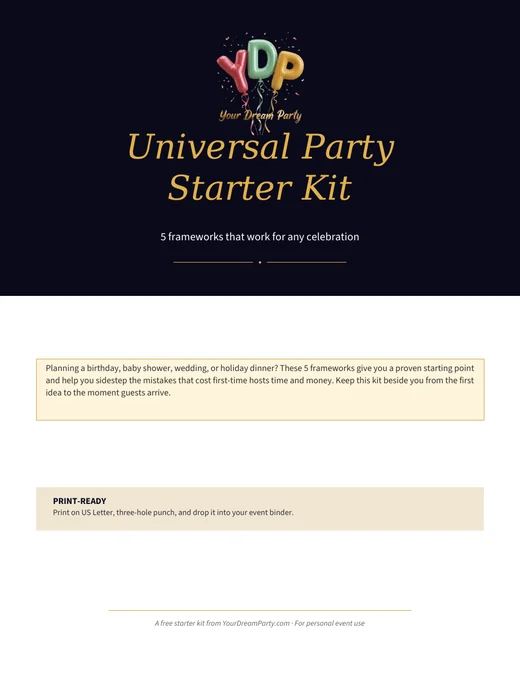
The toddler bracket, ages 2 to 3. A 6-to-12-guest party at home or a parent-and-child play space with a 60-to-75-minute window and a small cake moment. Lands at $150 to $350. The First Birthday Party Ideas guide covers the milestone first year; the 2nd Birthday Ideas for a Girl guide plans a girl's second birthday.
The preschool bracket, ages 4 to 5. A 10-to-16-guest party at home, an indoor play center, or a community hall with a 90-to-120-minute window and one anchor activity such as a craft station or bounce house. Runs $200 to $500. The Kids Party Ideas by Age guide walks the bracket-by-bracket planning sequence.
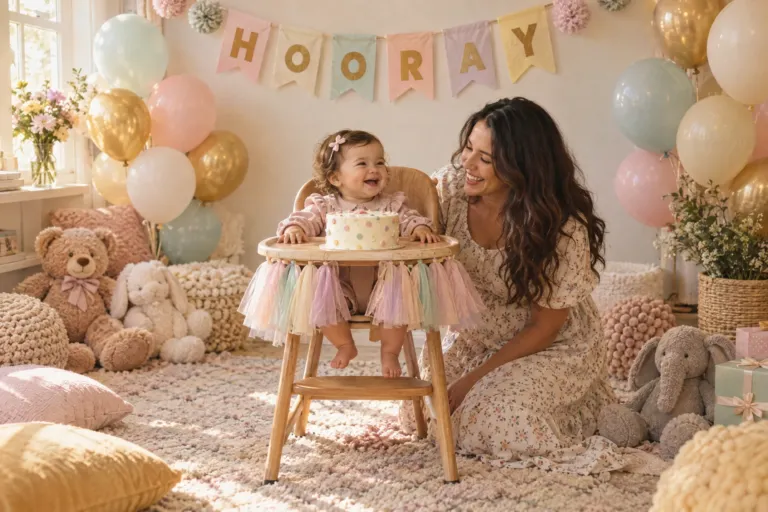
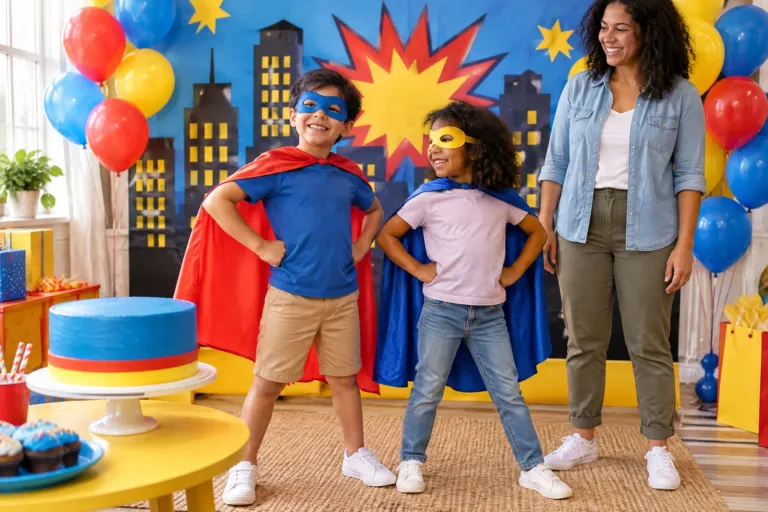
The school-age bracket, ages 6 to 9. A 12-to-20-guest party at home, a destination venue, or a backyard with a 2-hour window, 2 activity rotations, and a hot-food meal. Lands at $250 to $700. The Kids Birthday Party Ideas guide covers school-age parties in full, and the Birthday Ideas for 13 Year Olds guide picks up once those kids reach 13.
The tween and early-teen bracket, ages 10 to 13. A 6-to-14-guest party that shifts toward a destination experience or sleepover format with a 3-to-5-hour window. Runs $300 to $900. The 13th Birthday Ideas and Sleepover Party Ideas guides cover the tween transition.
Lock in 4 picks first. Pick one age bracket, one theme, one venue type, and one anchor activity. Parents who skip this step source balloons, favors, and signage before the format is locked, and what arrives on the day is a supply-store haul rather than one cohesive set. The Kids Party Venues guide handles the venue match by guest count and budget.
Which Themes Carry Most Kids Parties Without Franchise IP?
Theme picks land cleanly when they sit on generic categories, not licensed characters. A dinosaur theme gives you plenty of room to design, without the licensing risk or the higher cost of branded supplies. Ten theme tracks, plus a slumber-party format for older kids, carry most kids parties across the 3-to-12 age window.
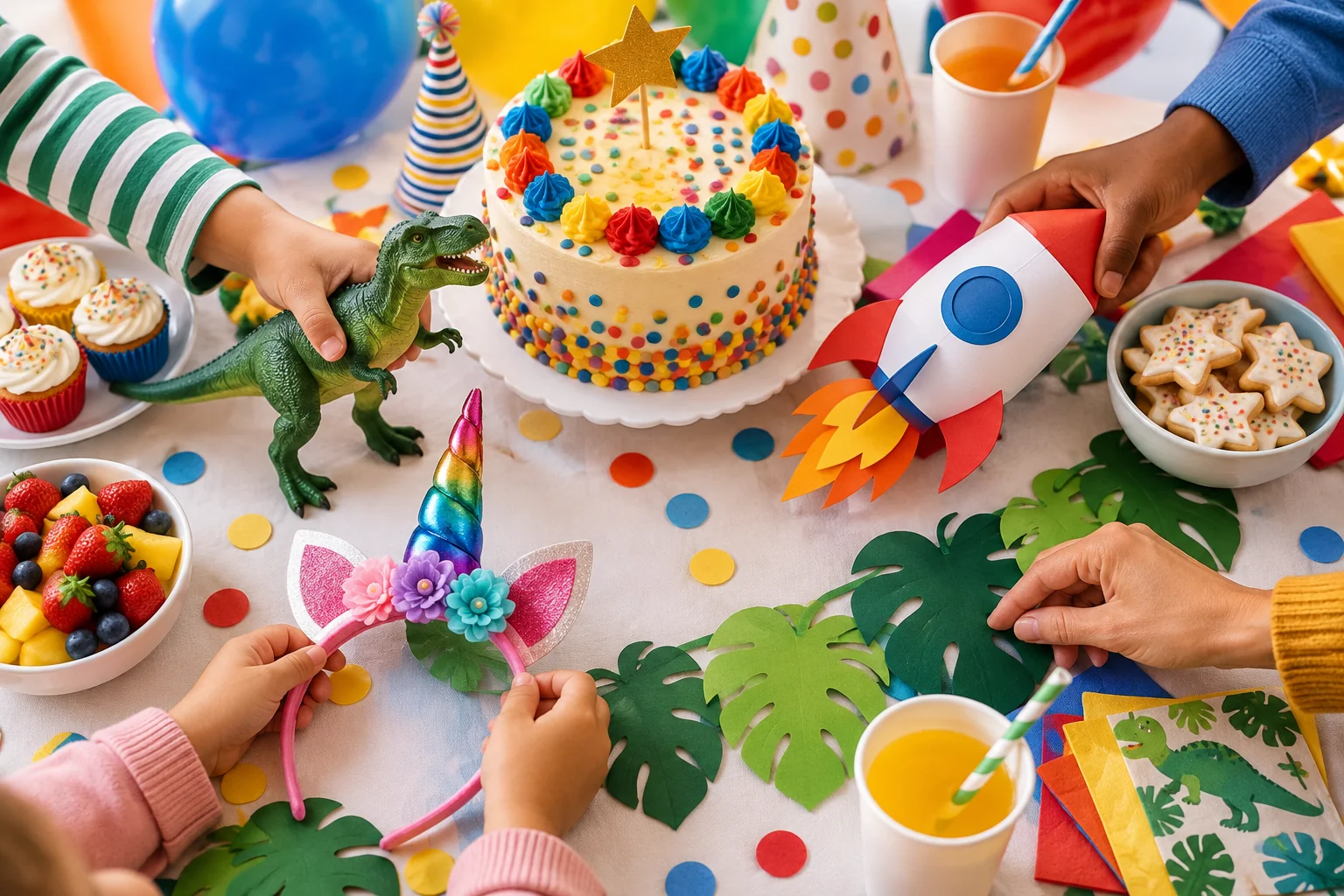
Dinosaur and prehistoric. A green-brown-mustard palette with paper-fern foliage, fossil-print plates, and a dig-for-fossils sensory bin. Suits ages 3 to 8. The Dinosaur Birthday Decorations guide carries the dinosaur decor, from one big statement piece to an earthy palette.
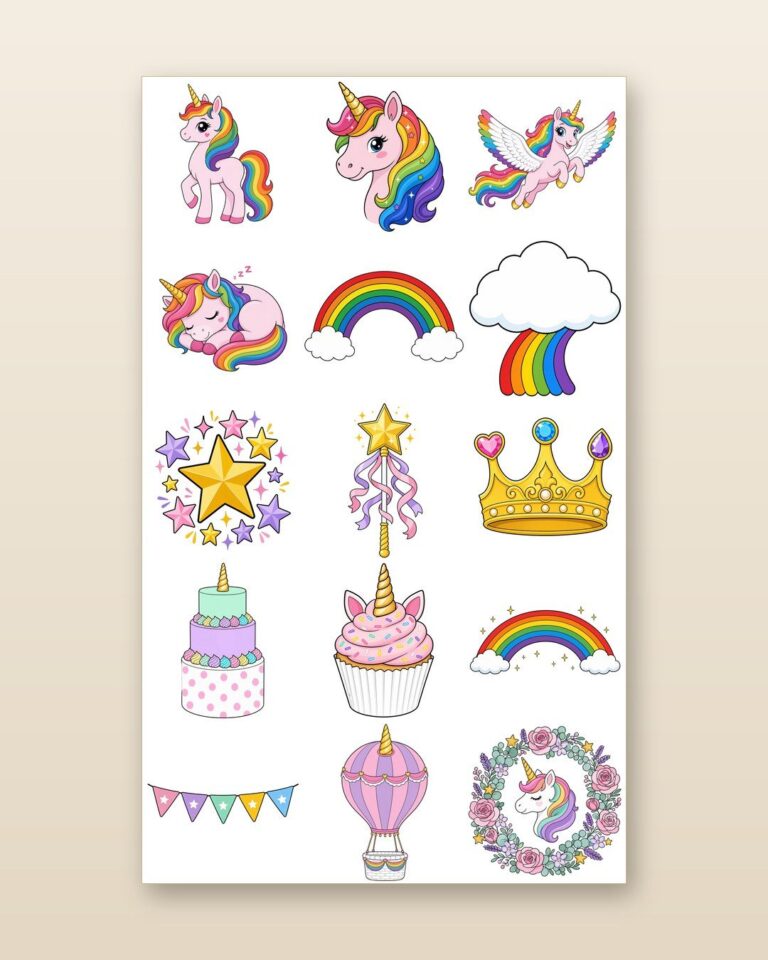
Unicorn and pastel rainbow. A pastel-pink-lavender-mint palette with rainbow balloon arches, unicorn-horn cake toppers, and a craft-your-own-headband activity. Suits ages 3 to 8. The Unicorn Birthday Decorations guide narrows the palette to 2 pastels and gold, with the sparkle saved for the backdrop and the cake table.
Princess and royal castle. A blush-gold-ivory palette with paper crowns, castle-shaped photo backdrops, and a tea-party snack moment. Suits ages 3 to 7. The Princess Birthday Party Decoration Ideas guide builds the princess decor around 6 directions; the Kids Tea Party Ideas guide carries the tea-party format end to end.
Space and astronaut. A navy-silver-neon palette with constellation backdrops, planet-shaped cookies, and a build-your-own-rocket craft station. Suits ages 5 to 10, with no gender lean.
Jungle, safari, and zoo. A green-tan-cream palette with paper leaves, animal-print plates, and a safari scavenger hunt for older kids. Suits ages 3 to 8. The Outdoor Games for Kids guide carries the active games.
Under-the-sea and mermaid. A teal-coral-iridescent palette with shell garlands, fish-shaped cake pops, and a treasure-hunt activity. Suits ages 4 to 9.
Construction and trucks. A yellow-black-gray palette with hard-hat favors, dump-truck dessert displays, and a dig-and-build block activity. Suits ages 3 to 7.
Art studio and rainbow. A rainbow-bright palette with paint-splatter cake design, smock favors, and a gallery-wall display for guest art at pickup. Suits ages 5 to 10.
Science and lab. A bright-primary palette with beaker-shaped cups, safety-goggle favors, and a slime-making or volcano-eruption demo. Suits ages 6 to 10. The Kids Party Themes guide pairs 6 themes to the age band and the activity arc.
Sports and game day. A team-color palette tied to the birthday child's interest, with jersey-print plates and an active-games rotation. Suits ages 6 to 12.
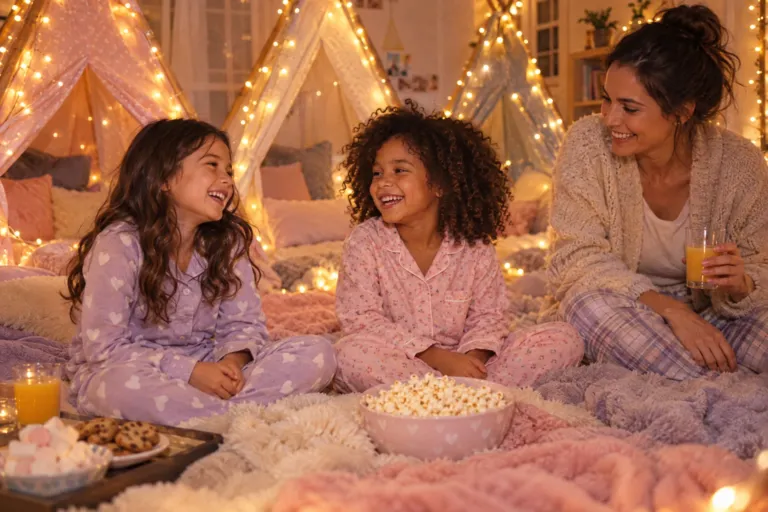
Slumber and pajama. A soft-pink-lilac-cream palette with sleep-mask favors, fairy-light tents, and a movie-night close. Suits ages 8 to 12. The Toddler Birthday Party Places and Ideas guide scales a party down for ages 1 to 3, and the Kids Birthday Party Ideas guide covers the cross-age theme picks. Skip licensed characters in the decor and favor bag; branded supplies cost more than the generic option and rarely match the editorial look that modern kids parties pull toward.
Which Venue Fits the Age Bracket and the Headcount?
Pick the venue and the headcount as one decision, since a mismatched room sinks the party before the cake comes out. A 20-guest party squeezed into a small living room feels cramped. Put 10 guests in a 60-capacity hall and the room falls quiet. Eight venue types carry most kids parties.
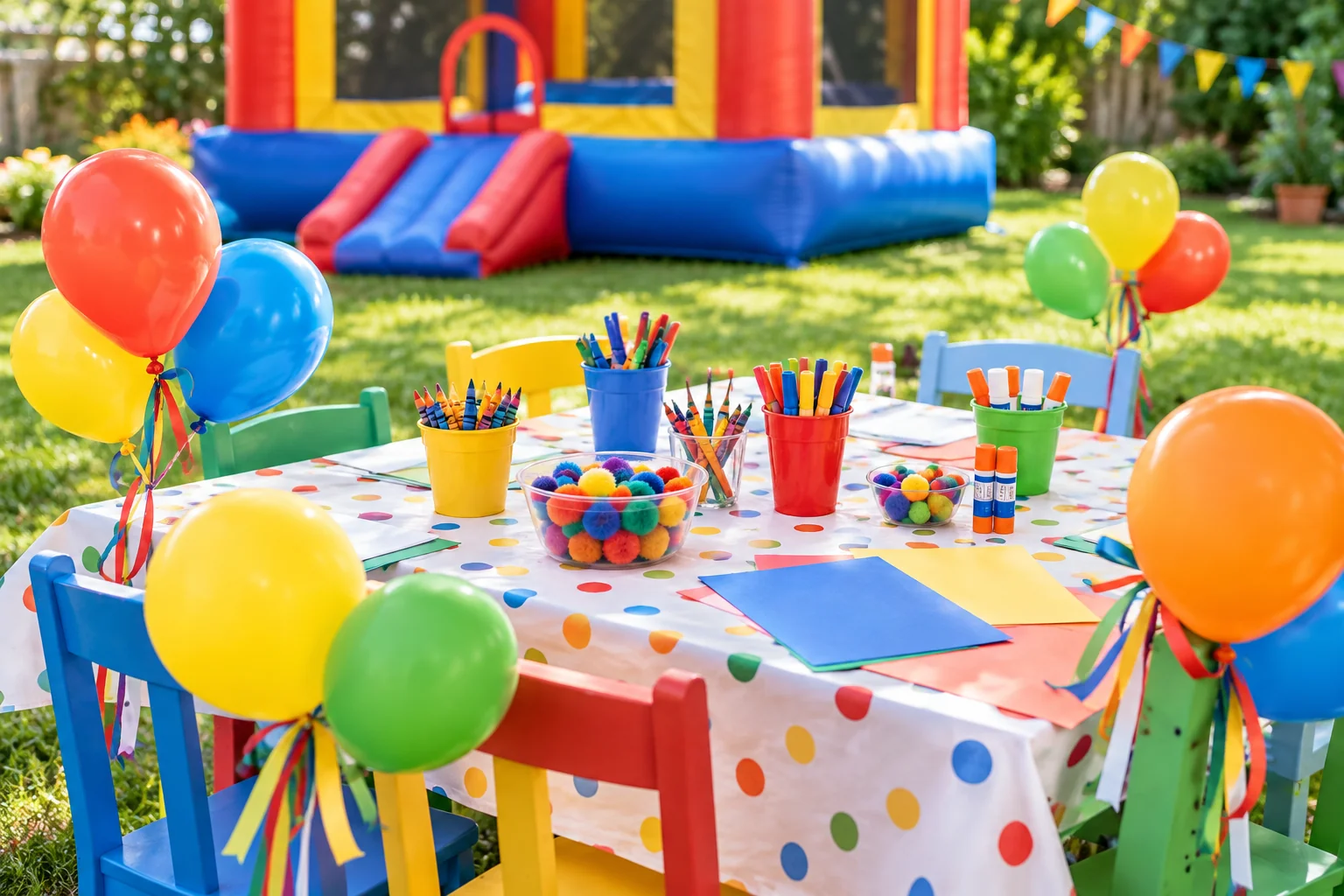
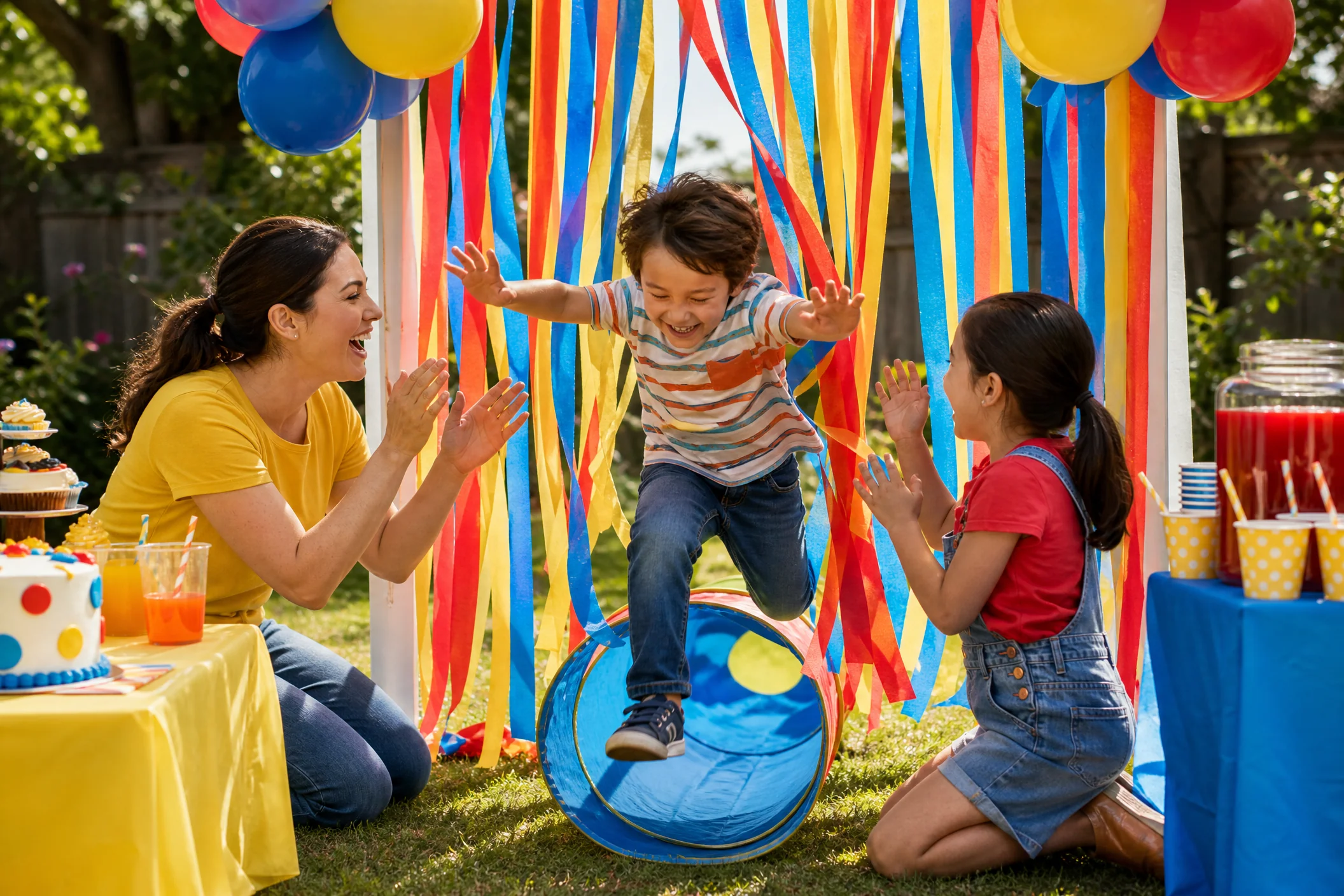
Home and backyard. A 6-to-20-guest party with full creative control, zero venue cost, and the option to spill from indoor to outdoor space. Best fit for ages 2 to 8, with a structured window of 60 to 75 minutes at ages 2 to 3, up to 2.5 hours at age 8. The Kids Birthday Party Places guide sets the backyard beside the other venue types, with the age band, guest count, and cost of each.
Community center and rented hall. A 15-to-40-guest party with table-and-chair rentals included and a 2-to-3-hour booking window. Hourly rental lands at $50 to $150 in most markets. Best fit for school-age parties where home capacity tops out.
Indoor play center and bounce-house venue. A 10-to-20-guest party at a dedicated kids play space with 75-to-120-minute booking blocks and the activity built in. Packages run $200 to $500. Best fit for ages 3 to 7.
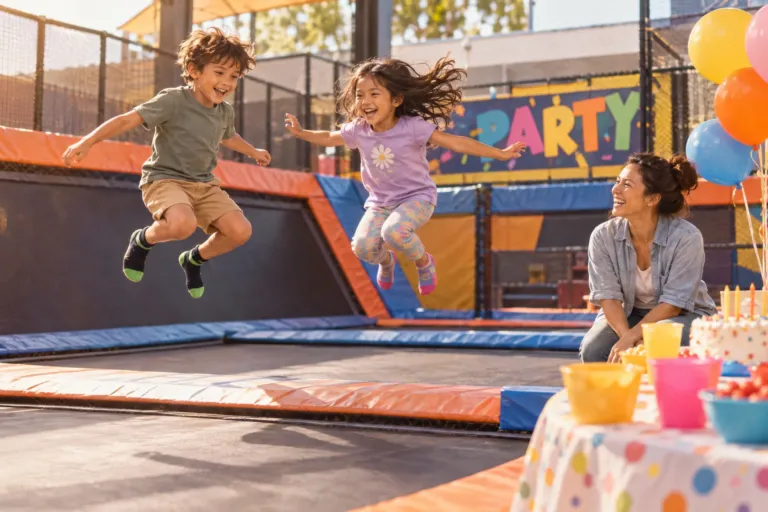
Trampoline park and adventure venue. A 10-to-15-guest party at a trampoline park, rock-climbing gym, ninja course, or laser-tag arena. Per-guest pricing runs $20 to $40 with private-room add-ons at $50 to $150. Best fit for ages 6 to 12.
Craft studio and pottery cafe. A 6-to-12-guest party at a paint-pottery studio, slime cafe, or art space with the activity built into the booking. Per-guest pricing runs $25 to $45. Best fit for ages 5 to 10.
Movie theater and entertainment center. A 10-to-20-guest party at a private screening, bowling alley, mini-golf venue, or arcade with a meal package and a single anchor experience. Best fit for ages 7 to 12.
Public park and pavilion. A 10-to-25-guest party at a reserved park pavilion with picnic tables and open green space. Best fit for warm-weather months across ages 4 to 10. The Places to Have Kids' Birthday Parties guide sets parks and other outdoor spots beside home and the booked venues; the Pool Party Ideas guide walks pool-party planning; the Pool Party Food Ideas for Kids, Water Games and Safety guide scales the plan to whatever pool you have.
Destination experience venue. A 6-to-15-guest party at a zoo, science museum, aquarium, or escape room with the venue acting as entertainment. Per-guest pricing runs $20 to $50 plus venue fee. Best fit for ages 6 to 12. Book with a 20 percent capacity buffer above the final RSVP count; kids parties often add late-confirm guests in the final week and sibling tag-alongs at younger ages.
How Long Should a Kids Party Run by Age?
Party duration scales tightly to age because kids energy and attention spans drive the program more than the parent agenda. Run too long and the room dissolves at the 90-minute mark; cut too short and the cake-and-gifts moment feels rushed. Four duration brackets carry most kids parties.
Ages 2 to 3, run 60 to 75 minutes. Toddler parties stay short because a toddler's attention is spent well inside the first hour. Sequence is arrival and free play (15 minutes), one short activity such as bubbles or a parachute game (15 minutes), snack and cake (20 minutes), open play and goodbye (15 minutes).
Ages 4 to 5, run 90 to 120 minutes. Preschool parties hold one structured activity block. Sequence is arrival and free play (20 minutes), anchor activity such as a craft or theme game (30 minutes), pizza and snack (25 minutes), cake and songs (15 minutes), open play and goodbye (15 minutes).
Ages 6 to 9, run 2 to 2.5 hours. School-age parties hold 2 activity rotations plus a meal. Sequence is welcome game (15 minutes), active block (30 minutes), sit-down craft (30 minutes), meal (25 minutes), cake and gifts (20 minutes), open play and goodbye (15 minutes). The Party Games and Activities and Kids Party Games guides cover the games sequence.
Ages 10 to 13, run 3 to 5 hours or a sleepover. Tween parties shift toward experience-based formats with longer single anchors (movie, escape room, mini-golf) or a sleepover with a sequenced evening run. The Sleepover Party Ideas guide walks the slumber party hour by hour.
Five moments carry the party. Most kids parties hit 5 timed moments: arrival and welcome, anchor activity, food and cake, gift and group photo, and pickup with favor handoff. Give each moment a clear cue and the party stays on track.
Build in buffer time. Build 15 minutes of buffer into a 90-to-120-minute party and 25 minutes into a 2-to-3-hour party. Buffer absorbs slow arrivals, spilled-juice cleanup, and the late-pickup parent. Send a reminder text 30 minutes before pickup with the favor-bag handoff plan, and stagger pickup across a 15-minute window. The Outdoor Games for Kids guide covers active-play timing for the energy-burn blocks.
Style the Decor Around a 3-Color Palette
Three colors and one theme prop family keep the decor clean. Spread 4 palettes across balloons, plates, signage, and the cake and you are back to the supply-store haul. Five habits keep the styling tight, and both the Kids Party Themes guide and the Party Decoration Ideas hub go deeper.
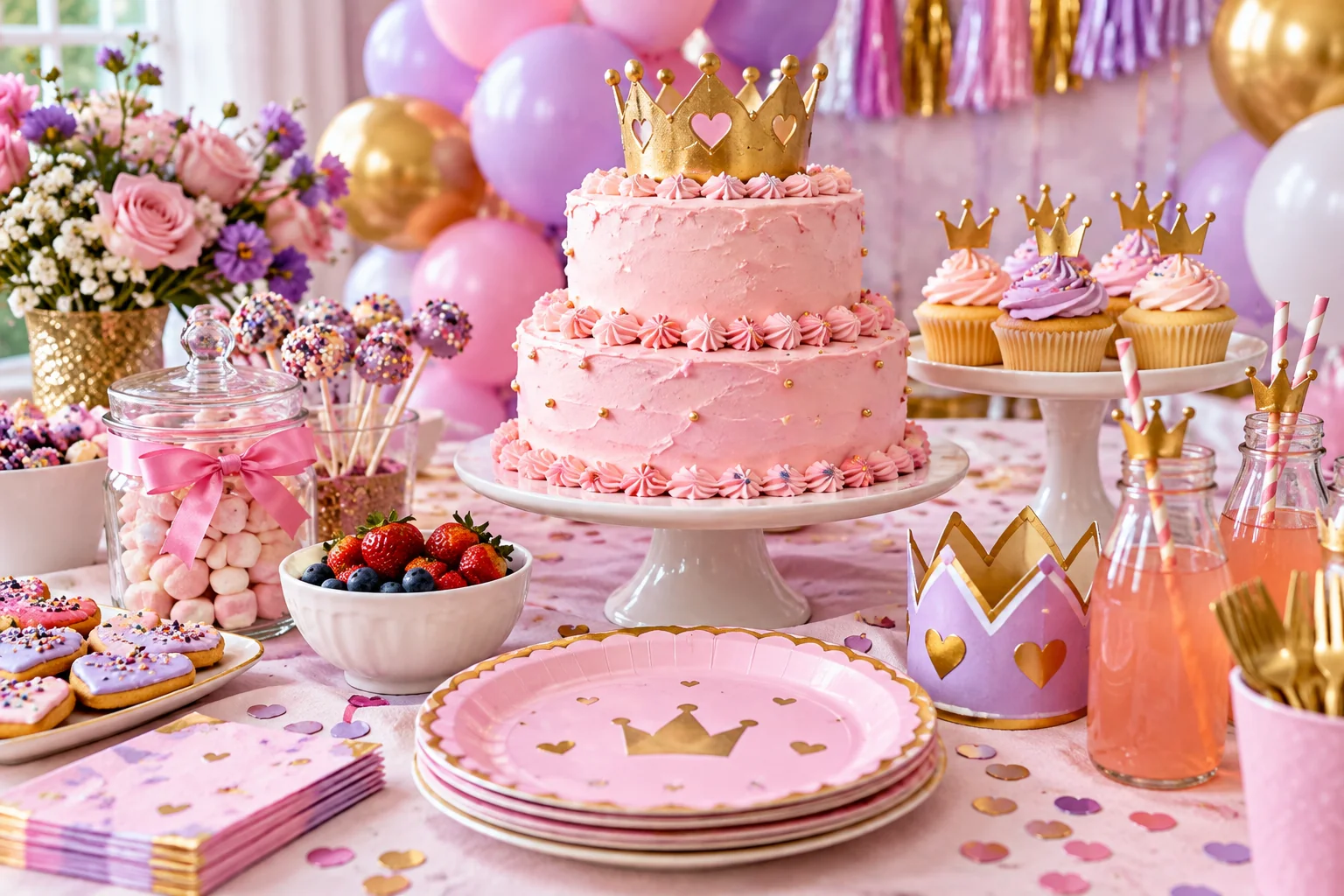
Stick to 3 colors. Pick 3 colors that share a temperature family, one base table-cover tone, and one accent metallic. For a unicorn party, pastel pink with lavender and mint plus a gold accent hangs together as one picture. For a dinosaur party, green with brown and mustard plus a brushed-bronze accent leans warm. The free Party Color Palette Generator turns one preset anchor color into a 5-color card: 3 main tones (primary, secondary, and accent) plus a neutral and a depth tone, in under 2 minutes.
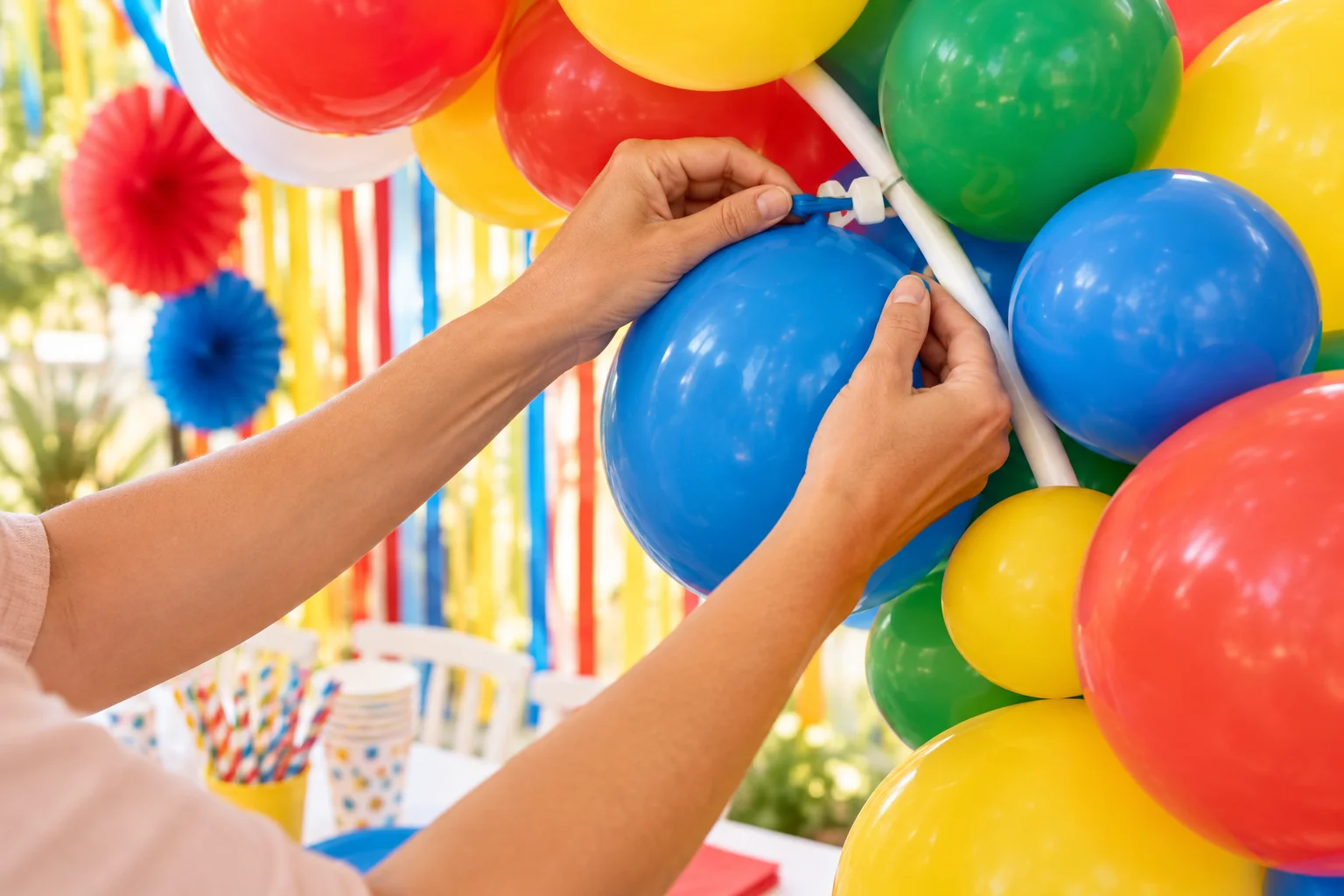
The balloon-arch anchor. No single decor element does more for the room than a balloon arch or garland. Three options carry most kids parties: a 6-foot organic garland (60 to 80 balloons), a frame-mounted arch (80 to 120 balloons), or a half-moon backdrop behind the cake table (40 to 60 balloons). The free Balloon Garland and Arch Calculator turns the plan into an order: a count for each balloon size and color, with the spare for pops listed on its own.
Balloon safety for under-3 guests. Latex balloon fragments are a choking hazard for young children, and most of all for children under 3. For toddler parties, swap latex balloons for foil options or move balloons to wall-mounted positions out of toddler reach. The choking-hazard note also applies to small favor items and cake decorations.
The themed paper goods. Themed plates, napkins, cups, and a name-banner garland carry the theme without major spend. A custom name banner runs $15 to $40 from print-on-demand vendors. Themed plates and napkins land at $1 to $2 per guest. Mix solid-color plates with one themed pattern napkin for a tidier table than fully themed sets.
The dessert-table anchor. One styled dessert table gives the photos their focal point. Anchor it with a cake, 3 to 5 cake-pop or cupcake stands, a name-banner backdrop, and one set of paper crowns. Varied heights on the dessert table photograph better than a flat lineup. The free Invitation and Sign Wording Generator drafts welcome-sign copy when the wording won't come. Older kids get their own decor notes in the Birthday Ideas for 13 Year Olds guide.
Plan the Food With Allergy Awareness
Kids party food is all about visual appeal, kid appeal, and easy handoff to small hands. Most kids parties run a 2-or-3-item snack lineup plus a single hot dish plus the cake-and-dessert moment. Five steps handle the food without the allergy mishap.
The kid-friendly menu template. Pick one hot anchor (pizza, hot dogs, mini-sliders, taco bar, mac-and-cheese cups), 2 snack rows (fruit platter, cracker-and-cheese, popcorn cups, veggie sticks with hummus), and one drink option (juice boxes, lemonade pitcher, water bottles). Pizza handles 8-to-12 guests per large pie. The Kids Party Food Ideas guide walks the full food lineup.
Themed presentation without health claims. Style the food to match the theme without making nutritional claims. Cut sandwiches into dinosaur shapes for a prehistoric theme, arrange fruit into rainbow rows for a unicorn theme, or use star-shaped cookie cutters for a space theme. Use the free Charcuterie and Tablescape Designer to lay out the styling.
Allergy awareness on the invitation. Ask for allergy notes on the invitation RSVP line. Plan one allergy-friendly alternative per snack row: a dairy-free option on the cheese plate, a nut-free option on the dessert table, a gluten-free option on the snack lineup. Always check for food allergies before serving any guest, and label each dish with its ingredient list.
Cake size and slice math. A 6-inch round cake serves 8 to 12 kid-portion slices. An 8-inch round serves 16 to 20. A 9-by-13 sheet cake serves 24 to 30. Cupcakes scale at 1 per guest, or 2 per guest when you want a buffer for second helpings. Order from a local bakery 10 to 14 days ahead.
Drink-station and cleanup math. Plan 2 juice boxes per guest across a 2-hour party plus water bottles. Alternate sugar-heavy drinks with water rather than serving them back-to-back. Label each dish with its ingredient list, keep wet-wipes at every seat, and send out leftover cake portions in to-go containers as part of the favor handoff. Always check for food allergies before serving and verify with each guest's parent at RSVP and at the door.
Which Games and Activities Hold the Energy by Age?
The games block is the engine of the kids party. Pick games matched to the age bracket, sequence active and sit-down moments in the right order, and the party rhythm holds across the full window. Four age-bracket game sets carry most kids parties.
Toddler-bracket games, ages 2 to 3. Open-ended sensory play (bubbles, parachute, ball pit, sensory bin), a music-and-movement song block, and a simple parade or follow-the-leader walk. Keep each block under 10 minutes; toddler attention shifts faster than older brackets.
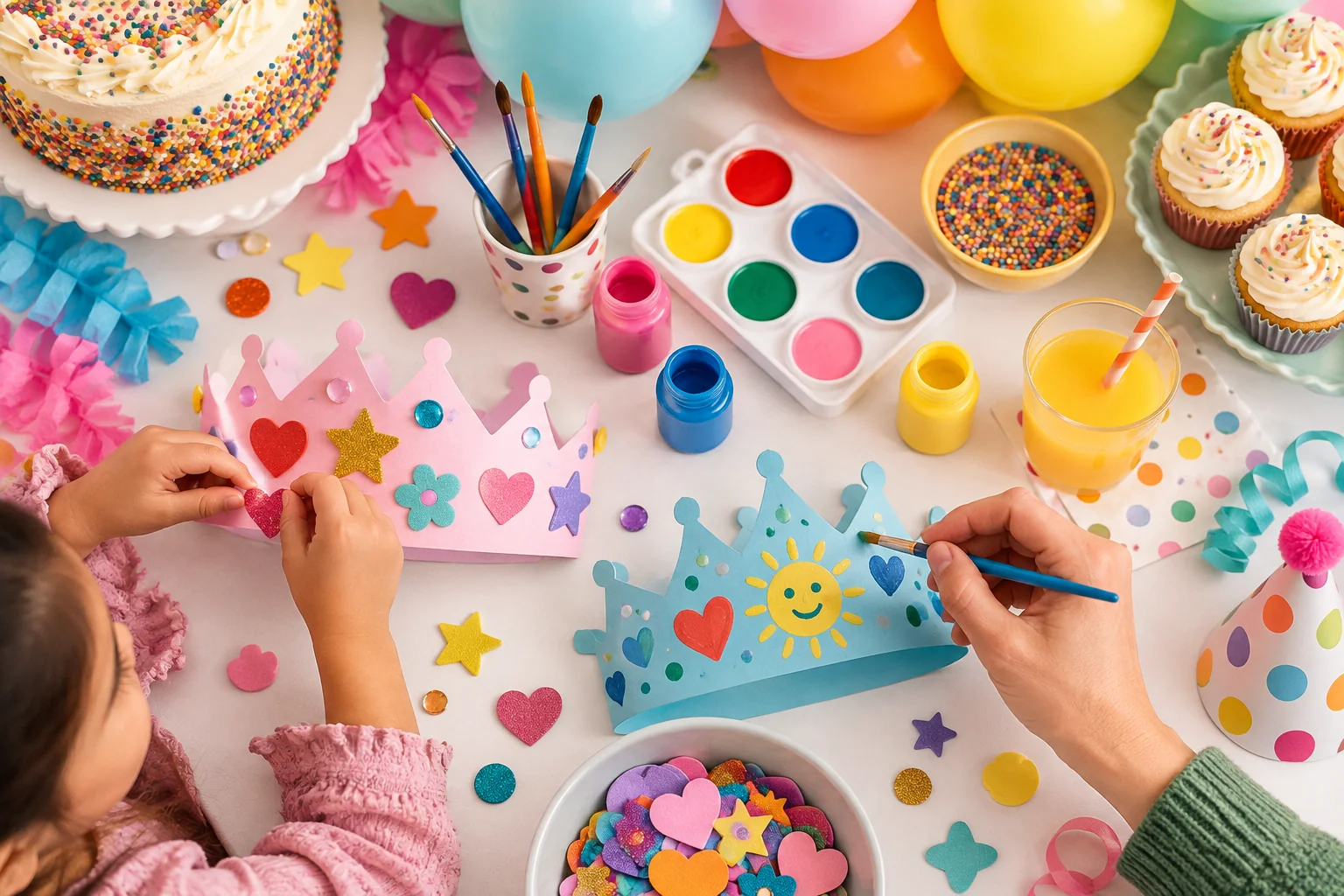
Preschool-bracket games, ages 4 to 5. One structured craft (decorate-your-own crown, paint-a-pot, color-a-mask), one classic party game (musical chairs, pin-the-tail, hot potato), and one open-play block. Sequence craft first while energy is fresh, then game, then open play.
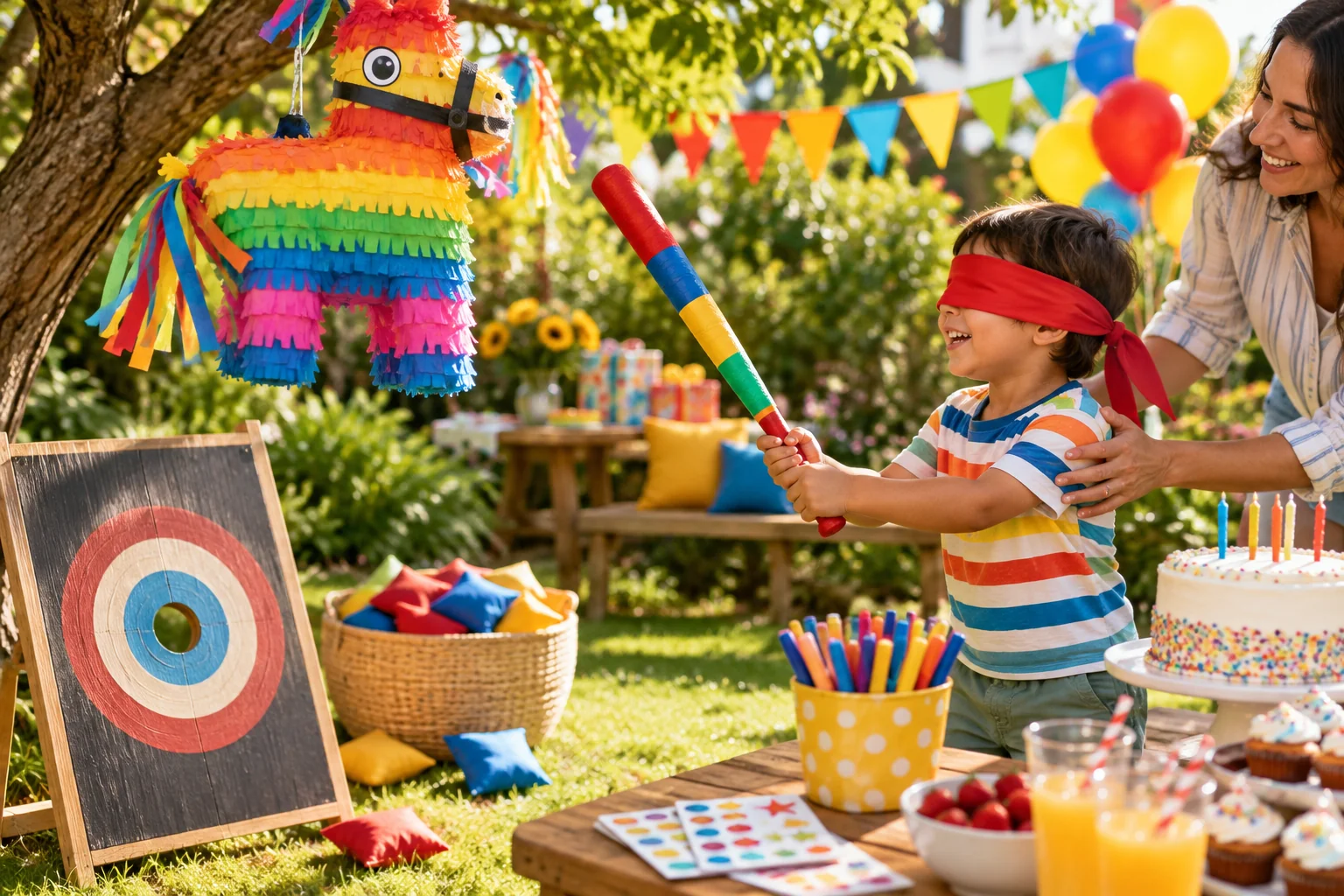
School-age-bracket games, ages 6 to 9. Two active rotations (relay races, obstacle course, beanbag toss, scavenger hunt) plus a sit-down craft or theme activity (slime making, science demo, painting station). The Outdoor Games for Kids guide covers backyard-friendly active games; the Party Games and Activities hub covers party games more broadly.
Tween-bracket games, ages 10 to 13. Single-anchor experiences (escape room scenario at home, group video-game tournament, scavenger-hunt-photo-challenge, group movie-night with themed snack rotation). Skip the classic-party-game format for tweens; that bracket will write it off as little-kid territory.
Pinata and prize-handoff protocol. A pinata works for ages 5 and up. Pre-stuff with individually wrapped candies and small non-candy items at a 60-40 ratio. For under-5 guests, use a pull-string pinata that opens at one moment instead of the swing-and-hit format, and when any guest is under 3, fill it with stickers and soft picks instead of hard candy and small parts.
Quiet cues and prizes for everyone. Plan one quiet-cue block (story reading, scavenger-hunt clue reveal) at the 45-minute mark for under-6 parties and at the 60-minute mark for older brackets. Avoid prize-only-for-the-winner formats that leave 4 crying guests; use participation-prize structures where every guest leaves the game block with a small token.
Send the Invitations and Map the RSVP Run
Invitation timing and wording set the headcount certainty for the rest of the plan. Send too late and RSVPs land in the final week; send too early and parents forget the date. Five steps handle the invitations.
Send timing by age. Send invitations 3 weeks ahead for school-age and tween parties (ages 6 to 13), 2 weeks ahead for toddler and preschool parties (ages 2 to 5), and 4 weeks ahead for destination-venue parties where guests need to clear weekend calendars. Set an RSVP deadline 7 to 10 days before the party.
Invitation channel pick. Digital invitations (text, email, an e-invite site, a printable PDF sent by email) suit most kids parties. Printed paper invitations work for milestone parties. The free Invitation and Sign Wording Generator drafts tone-matched wording in under 2 minutes.
The 5-line invitation template. Birthday child name and age, theme, date and time window, venue with address, RSVP contact with deadline and dietary line. Skip the long backstory; parents skim an invitation only long enough to pull out the date and slot it into the calendar.
Sibling and pickup policy. Address sibling policy in writing on the invitation. Toddler and preschool parties typically include siblings; school-age and older parties typically run drop-off without siblings. Provide pickup-and-dropoff times explicitly so parents plan their day.
Follow-up and reminder cues. Text guests at the 5-day mark for any outstanding RSVPs; initial deadlines slip past busy parents all the time. Send a 24-hour reminder to all confirmed guests with venue address, party window, and pickup notes. That reminder is the cheapest insurance against day-of no-shows. Mail thank-you cards within 2 weeks of the party to close the social arc.
Pack the Favor Bag and the Take-Home Treats
The favor bag carries the party home with the guest. Pack it well and the guest remembers the celebration warmly; pack it poorly and the bag becomes a 5-minute toss into the kitchen trash. Five steps handle the favors and keep the bags from looking like a dollar-store haul.
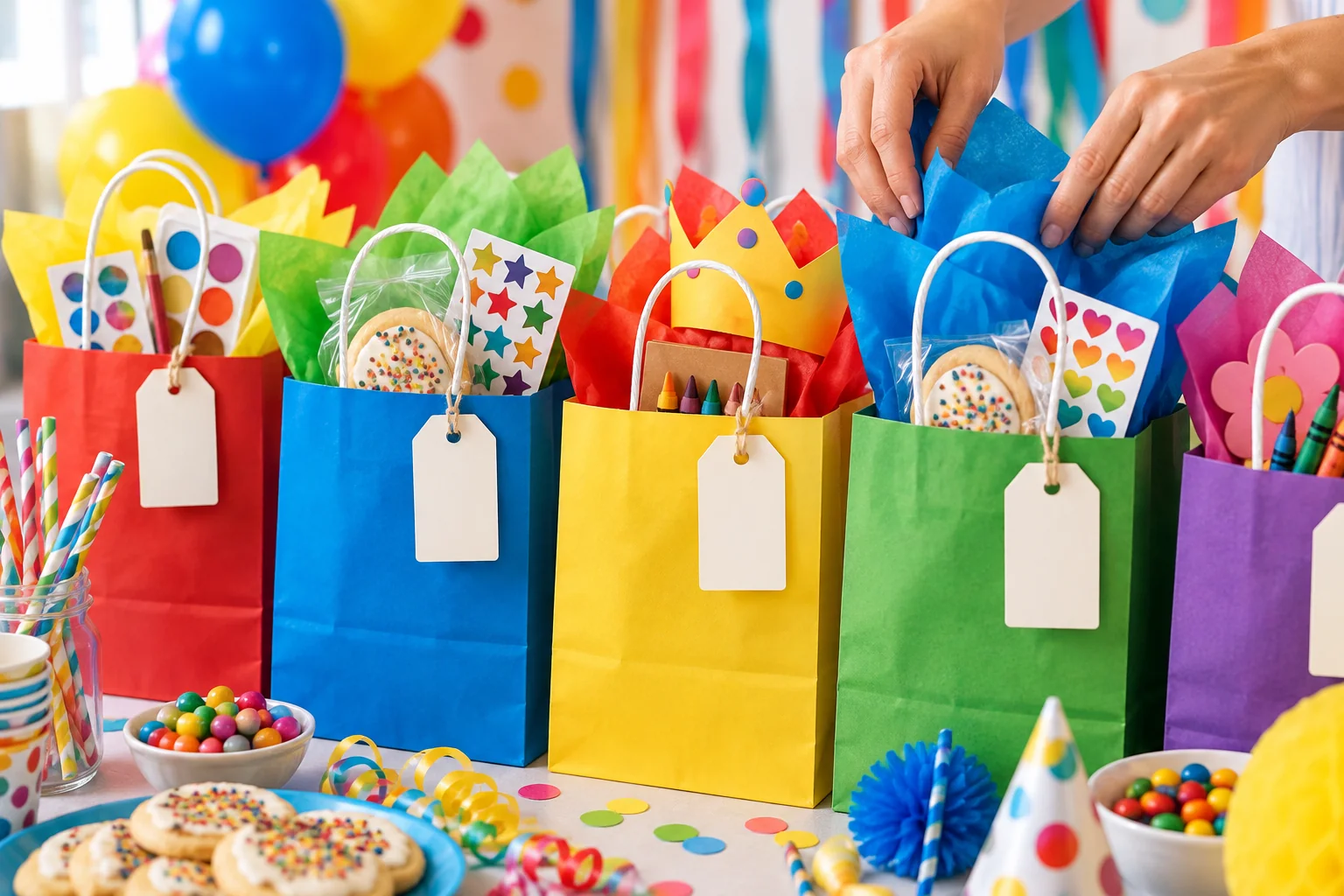
Pack 3 considered items. Three considered favor items beat 7 cheap items. Pick one craft or activity (mini coloring book and pencil set, a small craft kit, a sticker pack), one consumable (a wrapped cookie, fruit-snack pouch), and one keepsake (paper crown, theme-stamped notebook, small toy). The Kids Birthday Party Places guide puts favor handling on the checklist for a venue booking call.
Carry the theme into the bag. Theme-matched favors land warmer than generic options. For a dinosaur theme, include a small dinosaur figurine and a paleontology-sticker pack. For a unicorn theme, include a glitter wand and a unicorn-coloring page. Theme alignment costs nothing extra, and the care shows.
Budgets and personalization. $3 to $5 per favor bag for small-budget parties, $5 to $10 per bag for mid-tier parties, $10 to $20 per bag for milestone parties. Tie a printed name tag to each favor bag handle; name tags double as place-card prompts at the food table and turn favor handoff into a personal moment. The Girl Birthday Gift Ideas by Age guide carries gift picks for girls from 3 to 12.
Avoid choking-hazard items for under-3 guests. Small parts (toy figurines under 1.25 inches), latex balloons, and hard candy are choking hazards for children under 3. For toddler-bracket parties, swap small items for soft picks (a small stuffed animal, a sticker book, a wrapped soft cookie).
The handoff staging. Set the favor table at the door so each guest leaves with a single handoff moment at pickup. Avoid handing out favors mid-party; the message shifts from "thank you for coming" to "early signal to leave." Stage the favor table with a small thank-you sign and the birthday child handing each favor personally for ages 5 and up.
Capture the Day With a Photo Plan
The photos are the keepsake that holds the strongest emotional weight at 1 year, 5 years, and 20 years out. Two approaches handle most kids party photo capture: the parent-driven candid stream and a styled photo moment at the dessert table. Run both and the album feels complete.
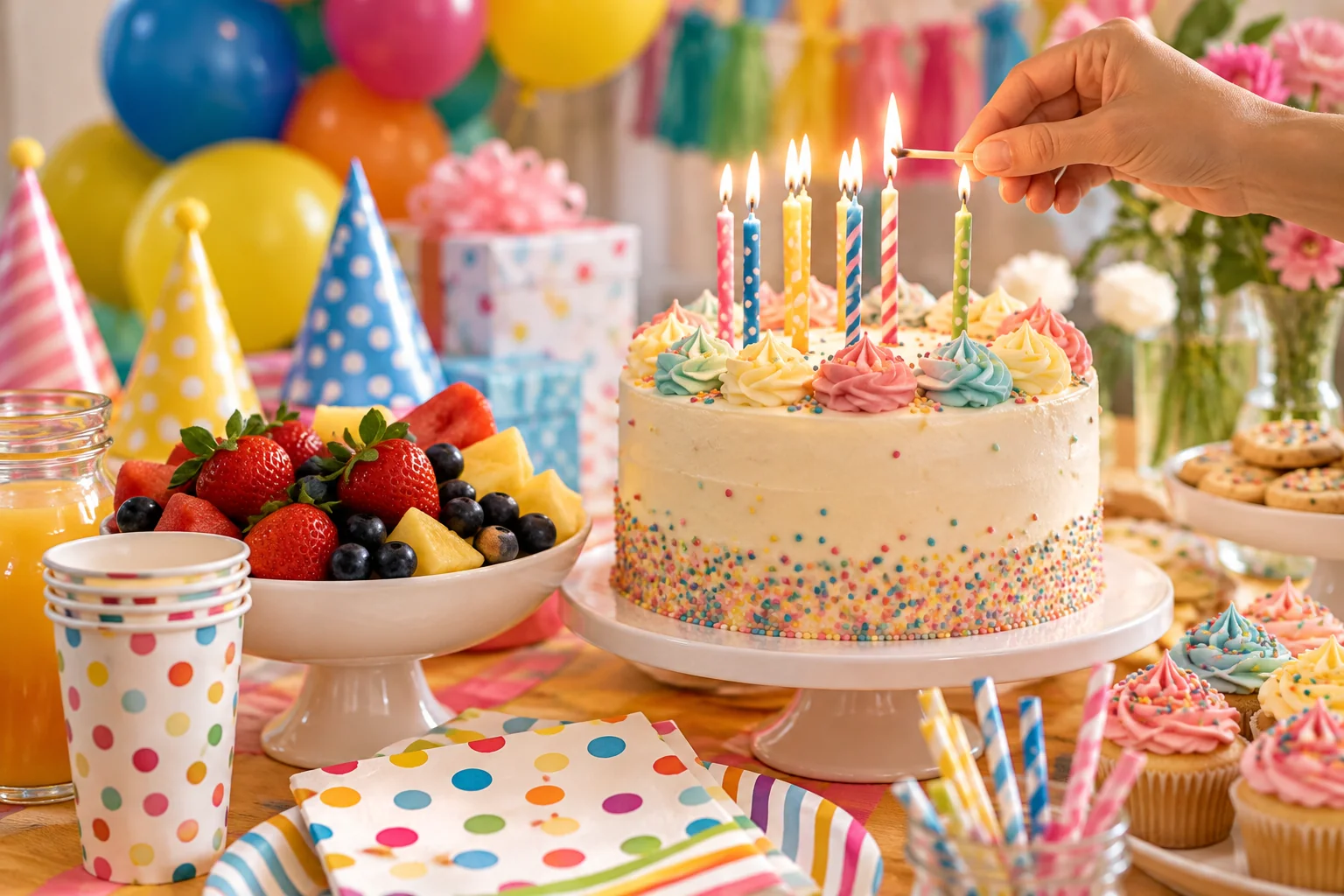
The candid stream. A friend, family member, or co-parent handles a casual photo stream across the full party window. Aim for 60 to 100 photos covering arrival, activity moments, food and cake, gift opening, and pickup. Save the camera roll to a shared album so other parents can drop their photos in too.
The styled cake-table moment. One styled photo of the birthday child at the dessert table with the cake, the candles lit, and the balloon arch behind. Get this shot in the first 60 minutes when the cake is fresh and the room is still styled. Save 2 minutes for the photo before cake-cutting starts.
Group photo with all guests. One group photo with all guests gathered around the cake table or balloon arch. Stage it as the cake-and-songs cue concludes when everyone is already grouped. The Photo Booth Backdrop Ideas guide carries backdrop-styling ideas for events of every size, a kids' rainbow party among them.
Photo booth for ages 7 and up. A small photo-booth corner with theme props (paper hats, signs, masks, prop hands) and a phone-camera tripod with self-timer pulls guest-driven photos through the party. Skip the photo booth for under-7 parties; younger kids do not engage with prop-driven photo formats.
Privacy and delivery. Confirm in advance with each guest's parent whether their child can appear in photos shared on social media; some families prefer no social-media posts. Share the camera roll privately by link or a shared cloud album when in doubt. A 30-to-60-second video edit covering arrival to cake to pickup delivers the strongest keepsake; a phone editing app handles the job, and the one-week mark is a comfortable deadline.
How the Kids Party Theme Generator and Companion Tools Carry the Plan
The Kids Party Theme Generator is a free tool that pairs a theme to the birthday child's age, interests, and party format in under 2 minutes. The theme is where the plan tends to stall, since the guest-list age range and the child's specific interest can push the shortlist past 3 options. The generator outputs a theme pick with 3 alternates, a decoration list, a food-and-snacks list, and an activity set matched to the age bracket.
The Party Theme and Vibe Finder Quiz handles the cross-event theme choice when the birthday party doubles as a family celebration with adult guests too. The quiz reads vibe and event type to pair a theme that holds both audiences without losing kid appeal. Pick Kids Party as the event and it drops Elegant and Dark & Dramatic from the vibe list, leaving Fun & Playful, Rustic & Natural, Soft & Romantic, and Wild & Festive.
The Party Color Palette Generator drafts the palette in under 2 minutes. Drop the event type, the season, the vibe, and one anchor color, and the tool returns 5 colors with hex codes built around that anchor, with the vibe swapping in supporting tones and a named season swapping the neutral, and tells you where each one goes across florals, balloons, tableware, signage and linens. It cuts the palette decision from 2 evenings to 2 minutes.
The Balloon Garland and Arch Calculator sizes the balloon order to the arch or garland length without the math overhead. Pick the shape and the location, enter the length, pick the fullness and the colors, and the calculator returns the count broken out by inch size, with a few 16-inch balloons in a standard room, more under a vaulted ceiling, and none outdoors. For toddler-bracket parties, follow the balloon-safety swap-to-foil note from the decor section.
Run 4 of the tools in sequence: the theme generator settles the direction, the color palette locks the look, the balloon calculator sizes the arch order, and the wording generator drafts invitations and welcome signs. Done in a single evening, the sequence produces the core of a kids party plan in under 45 minutes of focused work. For the activities at older-bracket parties, see the Party Games and Activities hub; the Party Decoration Ideas hub covers wider decor ideas; the Birthday Party Ideas guide handles wider milestone-birthday planning.
Frequently Asked Questions
How long should a kids birthday party last?
Most kids parties run 60 to 75 minutes for toddler ages (2 to 3), 90 to 120 minutes for preschool ages (4 to 5), 2 to 2.5 hours for school-age (6 to 9), and 3 to 5 hours or a full sleepover for tween ages (10 to 13). Sequence 5 timed moments: arrival, anchor activity, food and cake, gift and group photo, and pickup. Build 15 to 25 minutes of buffer to absorb slow arrivals and late pickups.
How much should I budget for a kids birthday party?
Most kids parties land between $200 and $700. Home parties run $150 to $400 for ages 2 to 5 and $200 to $500 for ages 6 to 9. Venue parties run $300 to $700 with per-guest pricing of $20 to $40 at trampoline parks and $25 to $45 at craft studios. Milestone parties and tween experience formats land $300 to $900. Add 15 percent contingency for late-confirm guests and supply overruns.
How many guests should I invite to my child's birthday party?
For a small party, a common guideline is age plus one: invite a number of guests equal to the birthday child's age plus 1 (a 5-year-old invites 6 guests, a 7-year-old invites 8). Bigger lists are common too: toddler parties often run 6 to 12 guests and preschool parties 10 to 16, with parents in attendance. School-age parties run 12 to 20 guests as drop-offs. Tween parties shrink back to 6 to 14 guests for experience-based formats.
What is the best theme for a kids party without using franchise characters?
Ten generic theme tracks cover most kids parties without licensing risk: dinosaur and prehistoric, unicorn and pastel rainbow, princess and royal castle, space and astronaut, jungle and safari, under-the-sea and mermaid, construction and trucks, art studio and rainbow, science and lab, and sports and game day. For ages 8 to 12 the slumber-party format carries an older-kid vibe. The free Kids Party Theme Generator pairs a theme to the child's age and interests in under 2 minutes.
How early should I send the kids party invitations?
Send invitations 3 weeks ahead for school-age parties, 2 weeks ahead for toddler and preschool parties, and 4 weeks ahead for destination-venue parties. Set an RSVP deadline 7 to 10 days before the party. Send a follow-up message at the 5-day mark to capture outstanding RSVPs, and send a 24-hour reminder to confirmed guests with venue address, party window, and pickup notes.
What food should I serve at a kids birthday party?
A kid-friendly menu template runs one hot anchor (pizza, hot dogs, mini-sliders, taco bar, mac-and-cheese cups), 2 snack rows (fruit platter, cracker-and-cheese, veggie sticks with hummus, popcorn cups), one drink option (juice boxes, lemonade pitcher, water bottles), and a cake-and-dessert moment. Pizza handles 8 to 12 guests per large pie. Always check for food allergies before serving and label each dish with its ingredient list.
Are balloons safe for kids parties with toddlers?
Latex balloon fragments are a choking hazard for young children, and most of all for children under 3. For toddler-bracket parties, swap latex balloons for foil options or place all latex balloons on wall-mounted positions out of toddler reach. Keep a parent supervising any balloon-heavy zone during the party. Also avoid small candy and toy items under 1.25 inches in toddler-bracket favor bags; the same choking-hazard rule applies.
What goes in a kids party favor bag?
Three considered favor items beat 7 cheap items. Pick one craft or activity (mini coloring book and pencil set, a small craft kit, a sticker pack), one consumable (a wrapped cookie, fruit-snack pouch), and one keepsake (paper crown, theme-stamped notebook, small toy). Tie each pick to the theme. Budget $3 to $10 per bag for most parties, $10 to $20 for milestone celebrations. Add a printed name tag for the personal-handoff moment.
Should I have a pinata at a kids birthday party?
A pinata suits ages 5 and up; sequence it as the closing-game cue before cake. Pre-stuff with individually wrapped candies and small non-candy items (stickers, mini-erasers, hair clips) at a 60-40 candy-to-item ratio. For under-5 guests, use a pull-string pinata that opens at one moment; the swing-and-hit format requires older guests with controlled aim to avoid injury. With toddlers under 3 in the room, skip the hard candy and small parts and stuff it with soft picks such as a sticker book or a small stuffed animal.
Is the Kids Party Theme Generator free to use?
Yes, the Kids Party Theme Generator is fully free to use with no sign-up required. The tool pairs a theme to the birthday child's age, interests, and party format in under 2 minutes, then outputs a theme pick with 3 alternates, a decoration list, a food-and-snacks list, and an activity set matched to the age bracket. You can copy, print, email, or share the results, and the tool works on phone and desktop.
Ready to Plan the Kids Party?
The fastest path from a blank page to a confident kids party plan is to settle the age bracket, the theme, the venue, and the headcount up front, then sequence the timeline, decor, food, games, invitations, favors, and photo plan against that core. The free Kids Party Theme Generator handles the theme in under 2 minutes, and the Kids Party Mega Bundle below adds theme artwork for the invitations, banners, and favor bags.
This page contains affiliate links to Amazon and other retailers. As an Amazon Associate, we earn from qualifying purchases at no extra cost to you. This helps us keep all our tools free.
Results generated by this tool are for planning and inspiration purposes only. Estimates are based on general guidelines and may vary depending on your specific circumstances. Always check for food allergies before serving. Always verify with your suppliers before making purchasing decisions.